The pH of the substrate determines the bioavailability of each nutrient long before the question of fertilization arises. A soil with a pH ranging from 6 to 7 makes the majority of macro and trace elements accessible, while a pH below 5.5 releases aluminum and manganese at phytotoxic concentrations. Mastering the essential needs of plants begins with a correct reading of this parameter; otherwise, any fertilizer application remains partially wasted.
Soil pH and Nutrient Bioavailability in the Garden
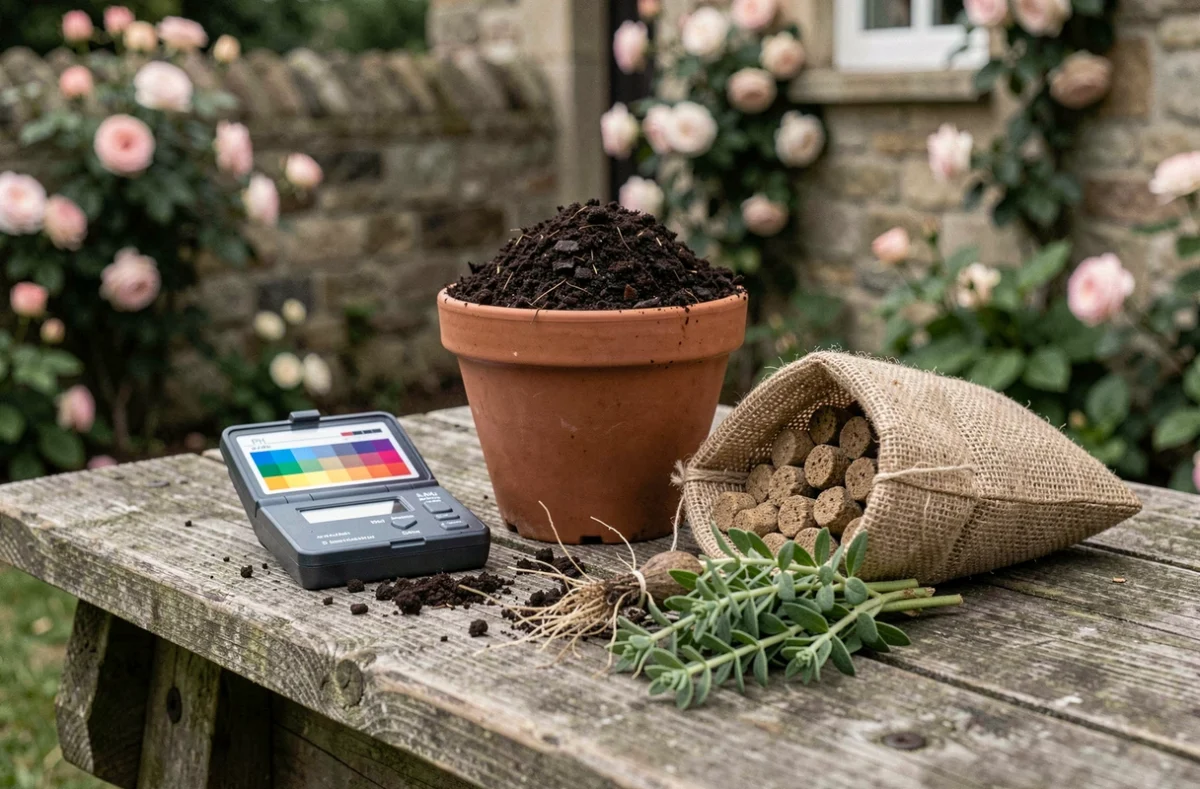
We recommend a pH test before any planting, especially on recently modified or amended plots. A calcareous soil (pH above 7.5) blocks iron, manganese, and zinc, causing leaf chlorosis that is often mistakenly attributed to a lack of nitrogen.
In acidic soil, the addition of dolomitic lime raises the pH while providing magnesium. In overly basic soil, incorporating elemental sulfur or acidic peat helps correct the situation over several seasons. Correcting the pH before fertilizing avoids unnecessary inputs.
The classic trap is to multiply complete NPK fertilizers without ever checking the pH. Phosphorus, for example, gets trapped as calcium phosphate in a basic environment or as iron phosphate in a very acidic environment. The plant then shows a deficiency despite a soil that is correctly dosed on paper. Identifying the essential needs of plants allows for adjusting each input according to the actual pH of the substrate.

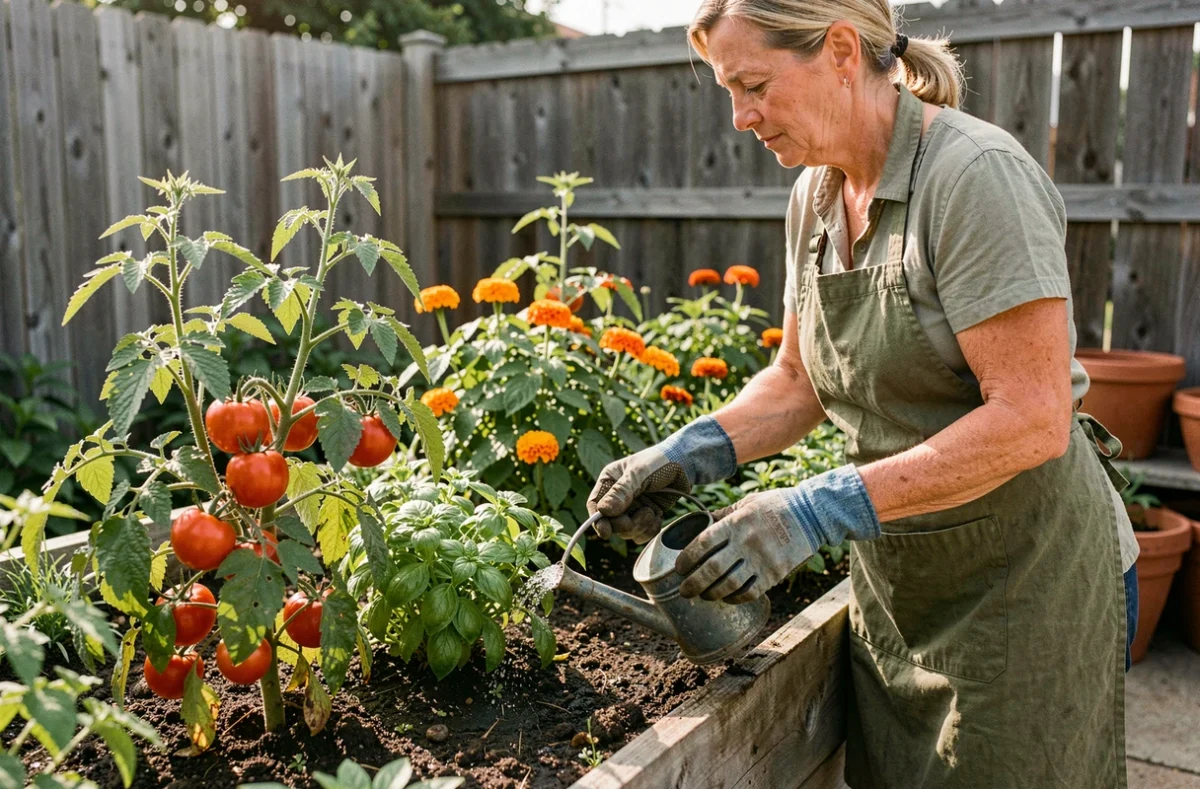
Deep Watering and Water Management in the Garden
Abundant and spaced watering is preferable to small frequent doses. This rule, emphasized by the Royal Horticultural Society, promotes infiltration to deep roots and limits shallow root development, which makes the plant vulnerable to even the slightest summer drought.
Adaptation must take into account soil texture. Sandy or calcareous soils, which drain quickly, require closer watering than clay soils, where water stagnates on the surface before migrating slowly. Watering preferably in the morning or during cool hours reduces losses through evaporation.
Mulching and Organic Matter for Water Retention
A mulch of about 5 cm thick limits surface evaporation and stabilizes soil temperature. Organic matter incorporated into the substrate simultaneously improves water retention and drainage, a dual effect that neither sand nor pure clay can offer alone.
The RHS advises against systematically fertilizing before installing plants suited to dry soils. Excessive growth stimulated by nitrogen increases water demand and frost sensitivity, which goes against the goal of resilience.
Planting Period and Root Development
Planting between autumn and early spring gives plants more time to develop their root system before dry periods. We observe in the field that plants installed in autumn go through their first summer with significantly less water stress than those planted in late spring.
This shift of a few months profoundly changes the plant’s autonomy. Well-established roots explore a larger volume of soil, access deep water reserves, and capture more nutrients without additional fertilization.
Case of Drought-Resistant Plants
The RHS specifies that some plants only become truly drought-resistant after one or two seasons of rooting. Achilleas, lavenders, or ornamental grasses, often presented as self-sufficient from planting, require watering follow-up in the first year.
- Plant in autumn to increase the rooting period before summer.
- Maintain regular watering in the first year, even for xerophytic species.
- Mulch immediately after planting to protect young roots from frost and desiccation.
NPK Balance and Trace Elements for Plant Growth
Nitrogen (N) stimulates vegetative growth, phosphorus (P) supports rooting and flowering, and potassium (K) enhances stress resistance. This triad is not enough to describe plant nutrition. Calcium, magnesium, and sulfur are equally crucial secondary elements.
Calcium structures cell walls. Its deficiency causes apical necrosis of fruits (blossom end rot in tomatoes, for example) that many gardeners confuse with a watering issue. Magnesium, the central core of chlorophyll, is lacking in light and acidic soils subjected to winter leaching.
Trace Elements and Deficiency Symptoms
Iron, manganese, zinc, copper, boron, and molybdenum are involved in tiny amounts, but their absence results in visible symptoms. An interveinal chlorosis (yellowing between the remaining green veins) points to iron or manganese. Deformed rosette leaves indicate a boron deficiency.
- Iron is mainly lacking in calcareous soil (iron chlorosis).
- Boron becomes scarce in sandy soil after heavy rains.
- Copper is deficient in peaty or very organic soils.
- Zinc becomes unavailable above pH 7.
We recommend a foliar analysis rather than just a soil analysis when symptoms persist despite amendments. The foliar analysis reflects what the plant actually absorbs, not what the soil theoretically contains.
A thriving garden relies less on multiplying inputs than on understanding the interactions between pH, soil texture, planting schedule, and water regime. Adjusting these parameters upstream reduces the need for fertilizers and produces plants that are more resilient to climatic variations.