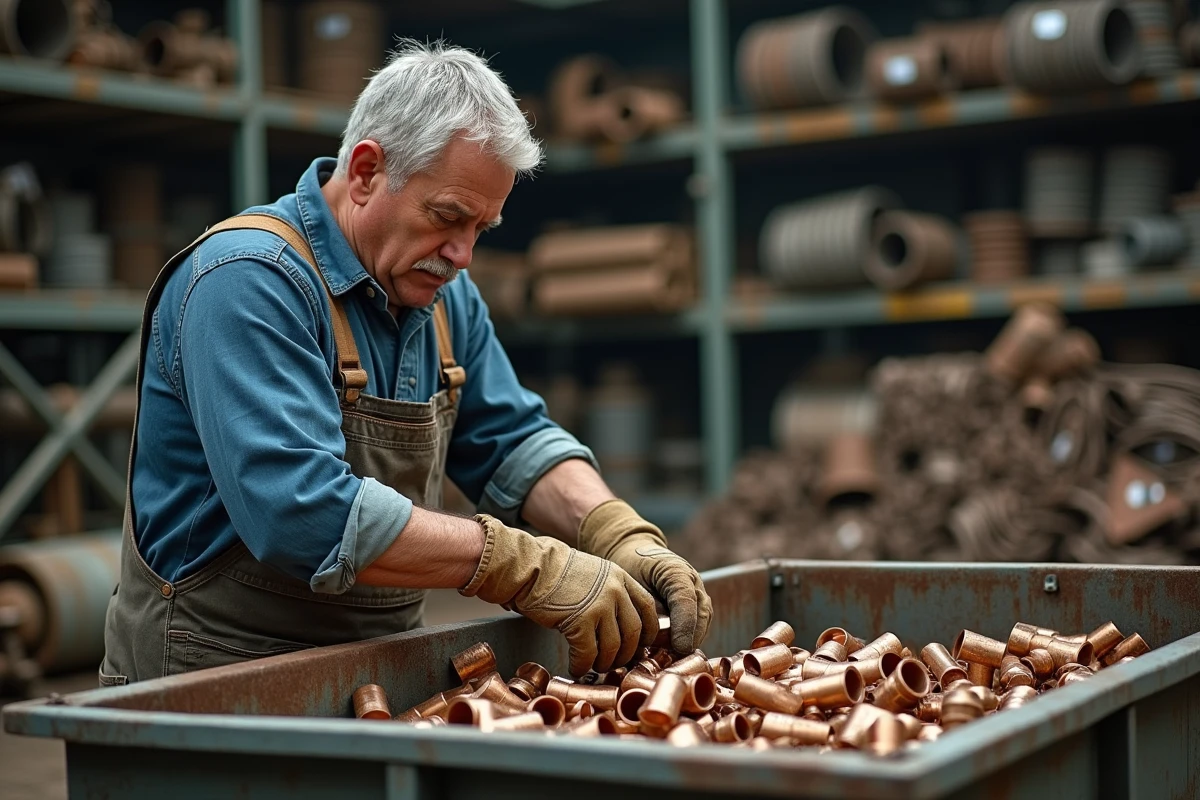
The bronze sold in scrap is trading at around 6.40 euros per kilo on average over the past few weeks in France, within a range of 5.20 to 7.40 euros according to scrap dealers. This buyback price masks a structural gap with the industrial value of the alloy, and understanding this gap changes the way to negotiate.
Gap between scrap dealer buyback price and industrial base price of bronze
We observe a point that most public pricing grids do not mention: the “raw material” value charged between industrial players (foundries, rolling mills) is incomparable to the “scrap” value of the same alloys in the collection circuits.
A telling example: some Swiss industrial price lists display a base price of 17.32 CHF/kg for standardized bronze alloys. Converted to euros, this represents more than double the average price offered by a French buyback center for equivalent scrap.
This gap is explained by the value chain. The scrap dealer buys a heterogeneous lot that he must sort, analyze, remelt, or resell to a refiner. Each intermediary takes their margin. When negotiating the price of bronze per kilo 2026, it is important to keep in mind that the recycler applies a processing discount that absorbs a significant portion of the material value.
For a workshop or a company that generates regular scrap, the question is therefore not just “what is the rate?” but “at which link in the chain can I sell?”. A clean lot, sorted by alloy grade, with a composition slip, can sometimes be sold directly to a foundry, bypassing the traditional scrap dealer circuit.
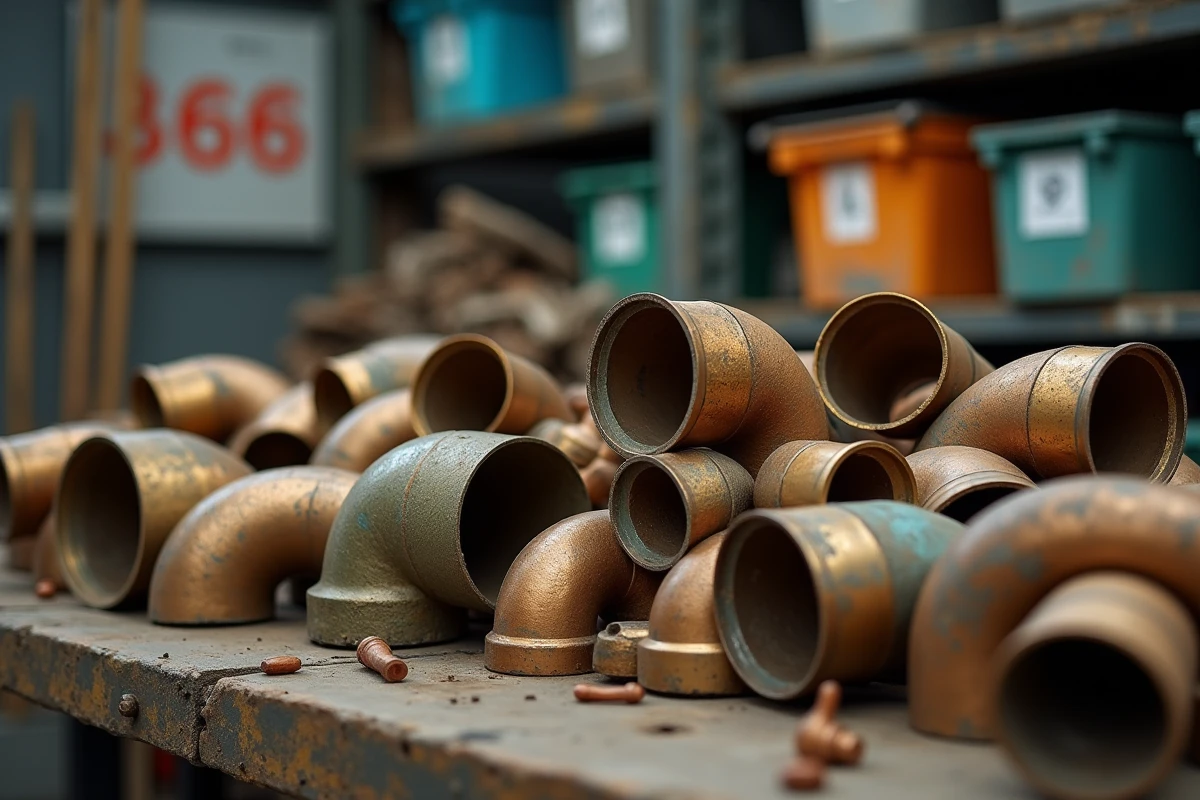
Copper and tin prices: the two metals that drive bronze pricing
Bronze is not traded on the stock market as such. Its price derives from its components, mainly copper (which makes up the bulk of the alloy) and tin. Following the copper price on the LME gives the guiding trend for bronze.
The 2026 copper prices remain volatile. This volatility renders any fixed price grid for the year obsolete. A price displayed in January may be outdated by March. We recommend checking the spot price of copper on the day of the transaction and then applying your recycler’s usual ratio.
Why the scrap dealer price does not follow the LME in real-time
Buyback centers do not adjust their grids daily. Most operate with a weekly update, sometimes biweekly. This time lag works against you when prices rise quickly and in your favor when they fall.
A lot sold on Monday when copper surged the previous Friday will often be bought back based on the old grid. Negotiating on the day of the price update can represent several tens of cents per kilo on a significant lot.
Hierarchy of non-ferrous metals: positioning bronze in the 2026 buyback grid
Selling bronze scraps without knowing the hierarchy of non-ferrous metals risks confusing alloys and losing value. The pricing classification observed among recyclers in 2026 follows a stable order:
- Bare copper (millberry) ranks at the top, with buyback ranges significantly higher than bronze, sometimes above 7 euros per kilo.
- Bronze is positioned in an intermediate range, between 4 and 7.40 euros depending on the cleanliness and copper content of the alloy.
- Clean brass (faucets, fittings) falls one notch below, generally between 4 and 4.50 euros per kilo.
- Aluminum and zinc close the ranks of common non-ferrous metals, rarely above 1.50 euros per kilo.
This hierarchy has a direct consequence for holders of mixed scraps. A mixed bronze-brass lot will be bought back at the price of the cheaper metal if sorting is not done in advance. The scrap dealer has no reason to pay a bronze price for a lot he will have to separate himself.
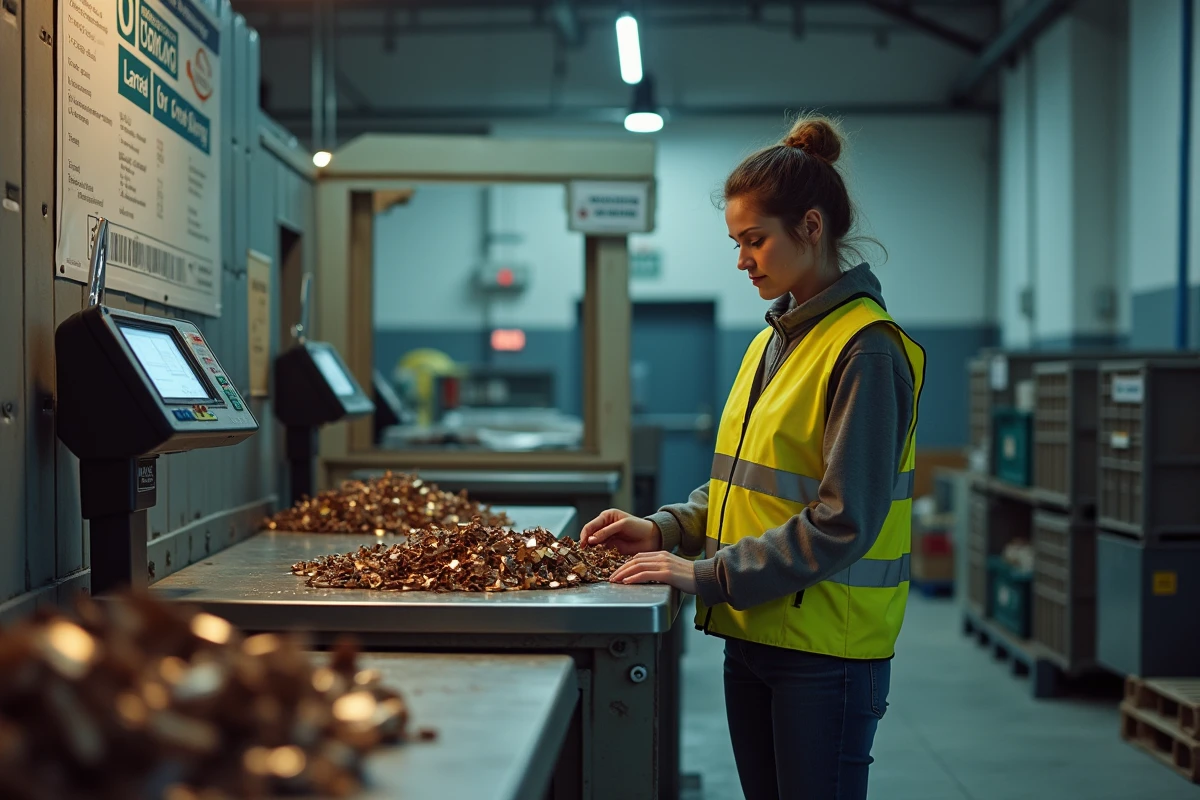
Alloy composition and lot cleanliness: the two levers of the real price
The term “bronze” encompasses dozens of shades. A bronze with 90% copper and 10% tin does not have the same value as a lead bronze or an aluminum bronze. Recyclers with a portable spectrometer adjust their offer to the actual composition. Those without one apply a conservative rate, indexed to the most common and least rich alloys.
Preparing a lot to maximize the buyback price
The cleanliness of the lot influences the price as much as the composition. We observe discounts sometimes exceeding 20% for soiled lots (paint, grease, fittings welded to other metals). A few concrete practices make a difference:
- Separate solid bronze (valves, rings, bushings) from composite parts (motors, copper-bronze welded assemblies).
- Remove non-metallic elements: seals, plastics, wiring residues.
- Form homogeneous lots by shade if possible, grouping pieces from the same industrial source.
- Weigh the lot before moving, to avoid disputes over the recycler’s scale.
A sorted and identified lot is negotiated based on the material price, while a bulk lot suffers a flat processing discount.
Regional variations in buyback in France
The price offered also varies according to the density of recyclers in the area. Regions with a high industrial concentration (Auvergne-Rhône-Alpes, Hauts-de-France) have more buyback centers, which stimulates competition and drives prices up. In rural areas, a single local scrap dealer can impose their price without competitive pressure.
Comparing at least three offers before selling remains the most reliable method to capture the best price, regardless of the region.
The price of bronze per kilo in 2026 is not a single figure. It results from the composition of the alloy, the cleanliness of the lot, the copper price on the day, and the link in the chain to which you sell. A clean lot, sorted by shade and sold at the right time during the week can easily gain one euro per kilo compared to a bulk lot dropped off without negotiation.