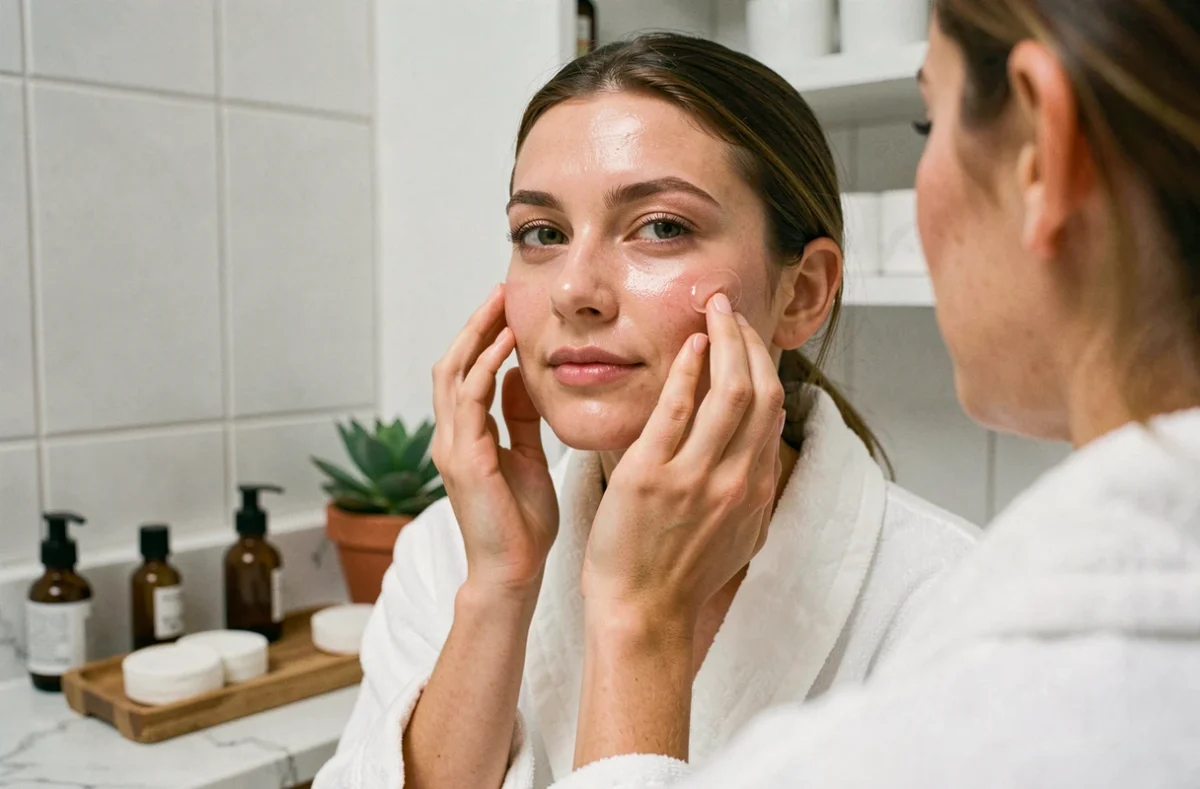
A lemon essential oil cream that causes redness, a “natural” serum that leaves skin feeling tight after every application: these situations are more common than you might think. In Vigil’Anses No. 24 (December 2024), Anses notes that essential oils can cause skin reactions, even in products labeled as natural. Building a beauty routine suited to your skin starts with understanding what your skin can tolerate—not with piling on more products.
When a natural skincare routine causes irritation: identify the trigger ingredient
Have you ever noticed that a product works for two weeks, then starts causing tightness or breakouts? This delay is typical of gradual sensitization. At first, the skin tolerates an active ingredient, but eventually the immune system reacts.
The most reliable way to identify the culprit is to stop using one product at a time for ten days. If the irritation clears up, you’ve found the cause. If nothing changes, stop using the next product.
The plant-based ingredients most often responsible for reactions in natural cosmetics are essential oils (peppermint, tea tree, lemon), certain concentrated floral waters, and fruit acid exfoliants. Just because an ingredient is plant-derived doesn’t mean it’s suitable for every skin type.
If irritation persists despite simplifying your routine, a dermatologist can perform patch tests to confirm a contact allergy. This can save months of trial and error.
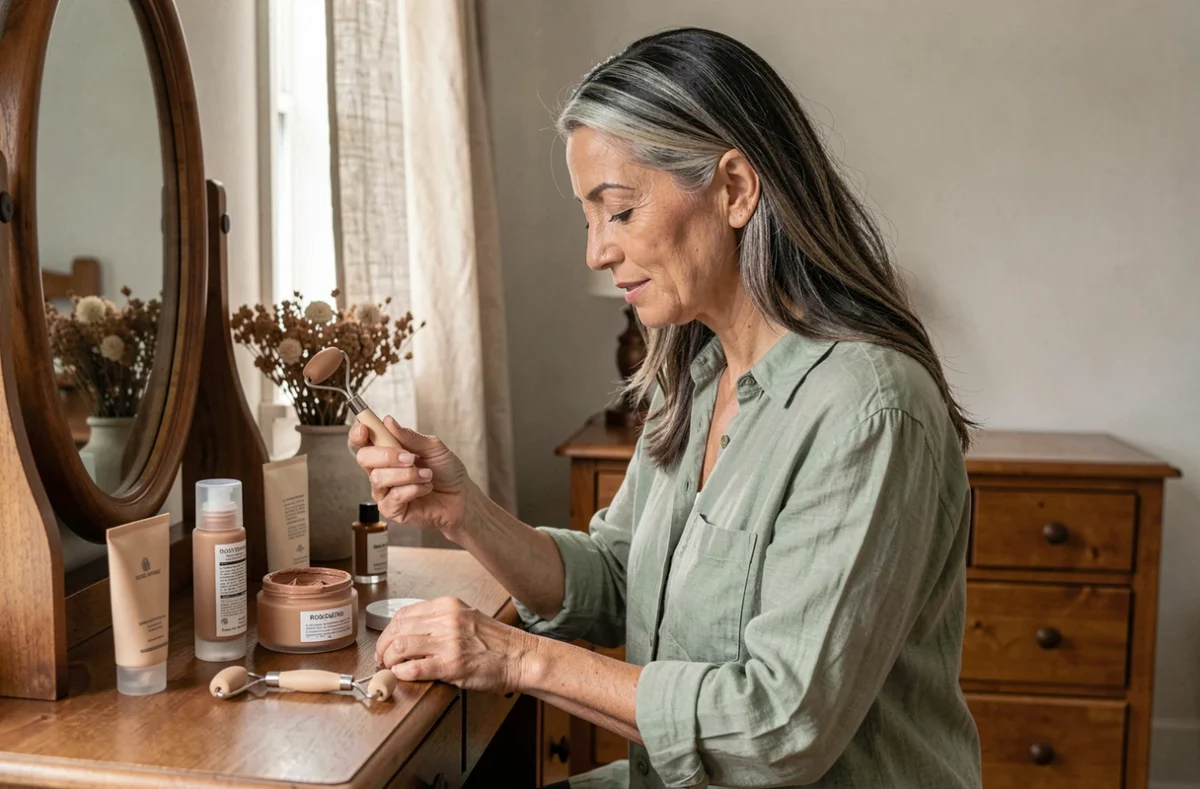
Facial skincare: three steps are enough for glowing skin
The American Academy of Dermatology recommends a simple foundation: cleanse, moisturize, protect. Using more products doesn’t necessarily improve results and may increase the risk of irritation or contact dermatitis. Resources on beauty at Belle et Élégante explore this approach, focusing on choosing the right skincare rather than using more of it.
A gentle cleanser, a moisturizer, and sunscreen meet most everyday skincare needs. Everything else (serum, exfoliant, mask) is an occasional addition, not a mandatory step.
Cleanse your face without damaging the skin barrier
Cleansing removes oxidized sebum, pollution, and makeup residue. A product with a pH close to that of the skin (around 5.5) helps preserve the skin’s protective barrier. Traditional soaps are often alkaline, stripping away this protective layer and leaving skin vulnerable.
For sensitive skin, a cleansing milk or plant-based cleansing oil (jojoba, sweet almond) can be a better choice than micellar water, which contains surfactants that may cause irritation over time.
Choose the right moisturizer for your skin type
Dry and oily skin need different textures. Here’s how to tailor your routine:
- Dry skin: a rich cream with shea butter or rosehip oil, applied while skin is still slightly damp to lock water into the upper layers of the epidermis.
- Oily or combination skin: a lightweight gel or fluid emulsion without mineral oil. Plant-derived hyaluronic acid hydrates without feeling heavy.
- Sensitive or reactive skin: a fragrance-free product with no essential oils and a short ingredient list. Fewer ingredients mean fewer potential triggers.
Sun protection: look beyond the SPF
SPF indicates protection against UVB rays, which cause sunburn. European Commission Recommendation 2006/647/EC calls for UVA protection of at least one-third of the labeled SPF. An SPF 30 sunscreen without a UVA label therefore lets through rays that accelerate skin aging.
Look for the circled UVA logo or the words “broad spectrum” on the packaging. Mineral filters (zinc oxide, titanium dioxide) are well suited to reactive skin because they remain on the surface rather than penetrating the epidermis.
Retinoids and potent active ingredients: practical precautions for your skin
Retinoids (retinol, retinoic acid) are among the best-documented active ingredients for promoting cell turnover. But their effectiveness comes with a downside: retinoids can irritate dry or reactive skin and are contraindicated during pregnancy, according to the AAD.
Gradual introduction is key. Start by applying the product two evenings a week to dry skin, avoiding the eye and lip areas. If no redness appears after three weeks, you can increase how often you use it.
People taking isotretinoin (an oral treatment for severe acne) often experience significant dryness and increased sun sensitivity. In this case, the AAD recommends stopping exfoliants and topical retinoids and sticking to a very simple routine: a gentle cleanser, a rich moisturizer, and high-protection sunscreen.
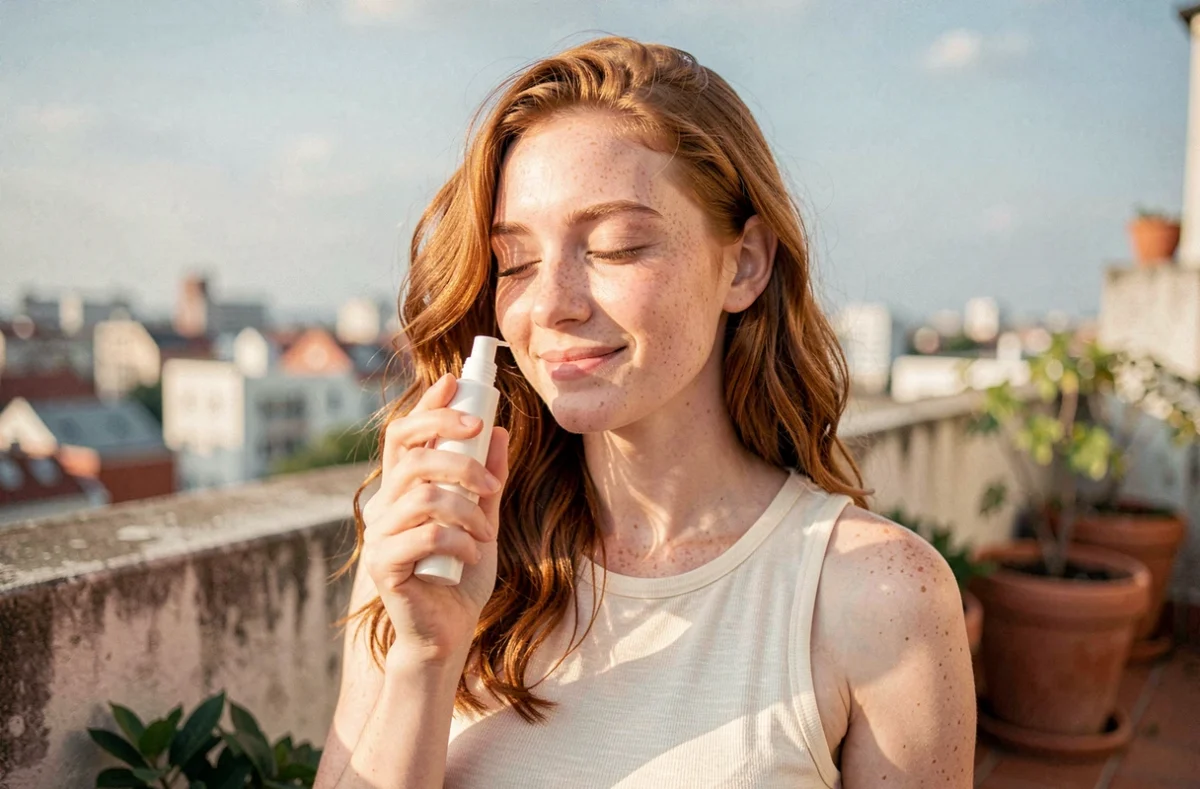
Natural facial ingredients: how to tell the helpful from the potentially harmful
Not all natural ingredients are created equal, and the same plant-based active can be beneficial at a low dose but irritating at a high concentration. Before adding a new product to your routine, ask yourself:
- Does the active ingredient appear near the beginning or the end of the INCI list? If it’s near the end, its concentration may be too low to have an effect.
- Does the product contain essential oils? If so, which ones and at what concentration? Some (lavender, tea tree) are better tolerated than others (cinnamon, clove).
- Has the formula been tested under dermatological supervision? The phrase “dermatologically tested” doesn’t guarantee that a reaction won’t occur, but it does indicate that a tolerance-testing protocol was followed.
- Is your skin going through a vulnerable period (seasonal change, medical treatment, pregnancy)? During these times, reducing the number of products is the safest approach.
Rosehip oil, shea butter, and aloe vera are among the best-tolerated plant-based ingredients for everyday facial skincare. They moisturize or soothe without causing photosensitivity, provided you use them pure or in formulas without added synthetic fragrance.
A glowing beauty routine isn’t measured by the number of bottles lined up in your bathroom. It’s built by paying attention to how your skin responds, simplifying your routine when something seems off, and consulting a dermatologist whenever irritation lasts more than a few days.