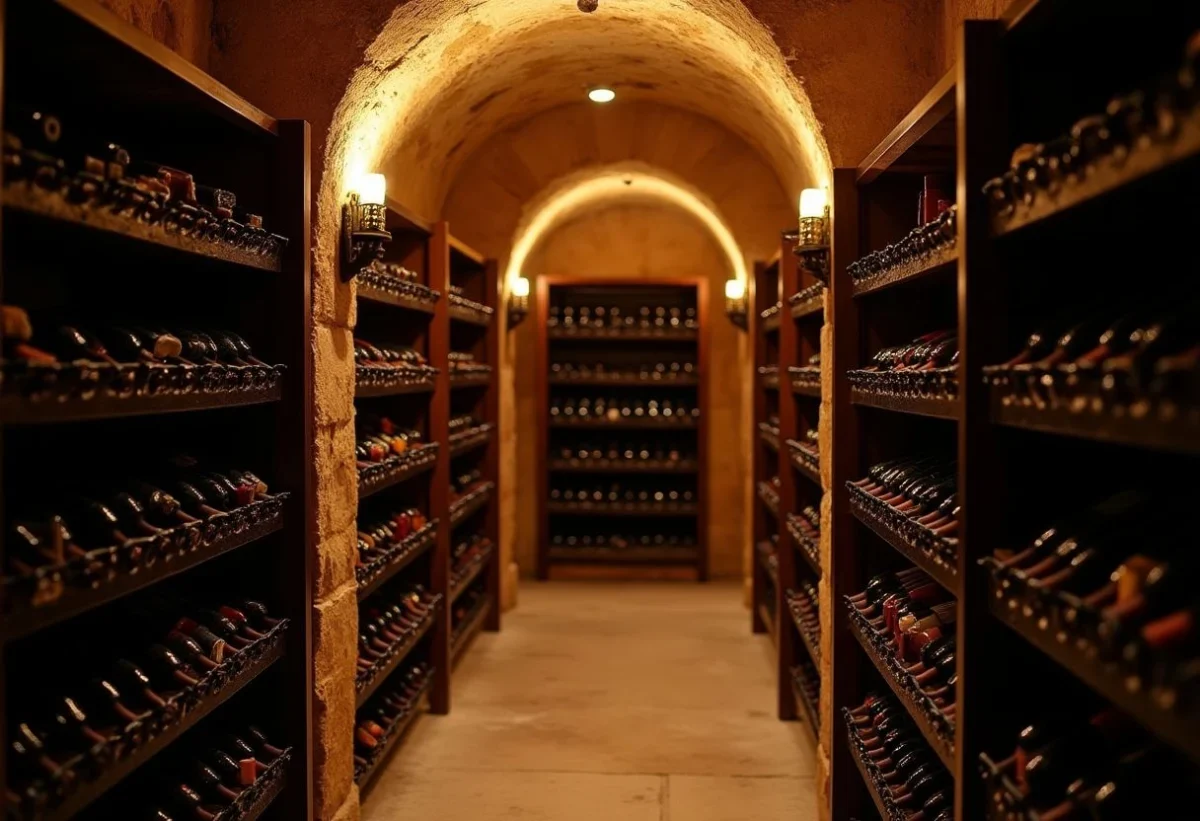
Wine cellars, enchanting places where time seems to stand still, hold treasures that only the initiated know how to appreciate. True sanctuaries of preservation, they house bottles of wine carefully kept away from light and temperature fluctuations. For enthusiasts and aficionados, entering a wine cellar is not just a sensory experience, but also a journey through time.
The foundations of a successful wine cellar
Creating a wine cellar is an art that requires special attention to certain essential details to ensure that the wines retain all their splendor.
- Constant temperature: for optimal preservation, wines require a stable temperature, generally around 12 °C. Fluctuations can alter aromas and cause premature aging.
- Controlled humidity: a humidity level between 60% and 80% is ideal. This prevents corks from drying out and air from penetrating, thus preventing oxidation.
- Absence of light: light, especially ultraviolet, can degrade the chemical compounds in wine, affecting its color and taste. A dark wine cellar is therefore essential.
- Absence of vibrations: vibrations disturb the natural deposits of wine, potentially compromising its quality.
Choosing the right wines for your cellar
Having a varied collection is the cornerstone of a successful wine cellar. Connoisseurs agree that diversity enriches the tasting experience.
To properly stock your wine cellar, it is wise to include wines from different terroirs and grape varieties. Bordeaux and Burgundy are must-haves, but don’t overlook wines from the Loire or Alsace. New World wines, such as those from Australia or Chile, add a touch of exoticism. Consider incorporating champagnes and other sparkling wines to celebrate special occasions. Finally, some age-worthy wines, capable of improving over time, deserve a prominent place in your collection.
Maintaining and renewing your collection
Managing a wine cellar is not limited to preservation; it is also essential to ensure its renewal and maintenance.
To keep a dynamic collection, it is advisable to taste regularly. This allows you to track the evolution of your wines and adjust your purchases accordingly. Establishing an accurate inventory will help you keep track of each bottle. Digital applications make this task easier, offering reminders about optimal consumption dates. Interacting with other enthusiasts during tastings or vineyard visits can inspire your future acquisitions. Thus, your cellar remains a living and evolving space.
The art of tasting
Tasting is the pinnacle of the oenological experience, revealing the hidden secrets of each vintage.
Tasting a wine is an act of personal and cultural discovery. Each sip opens a window into the history and geography of a region. For a successful tasting, serve the wine at the appropriate temperature, use suitable glasses, and take the time to examine its color, aroma, and taste. Allow the wine to aerate to fully release its flavors. Compare impressions with other enthusiasts and share your discoveries. Thus, each tasting becomes a shared experience, enriching your understanding of the wine world.
Wine cellars are much more than mere storage spaces. They embody a living heritage, a passion passed down from generation to generation. By mastering the secrets of a wine cellar, you embark on a sensory and cultural journey, where each bottle tells a unique story. Whether your cellar is modest or opulent, it reflects your taste and expertise.