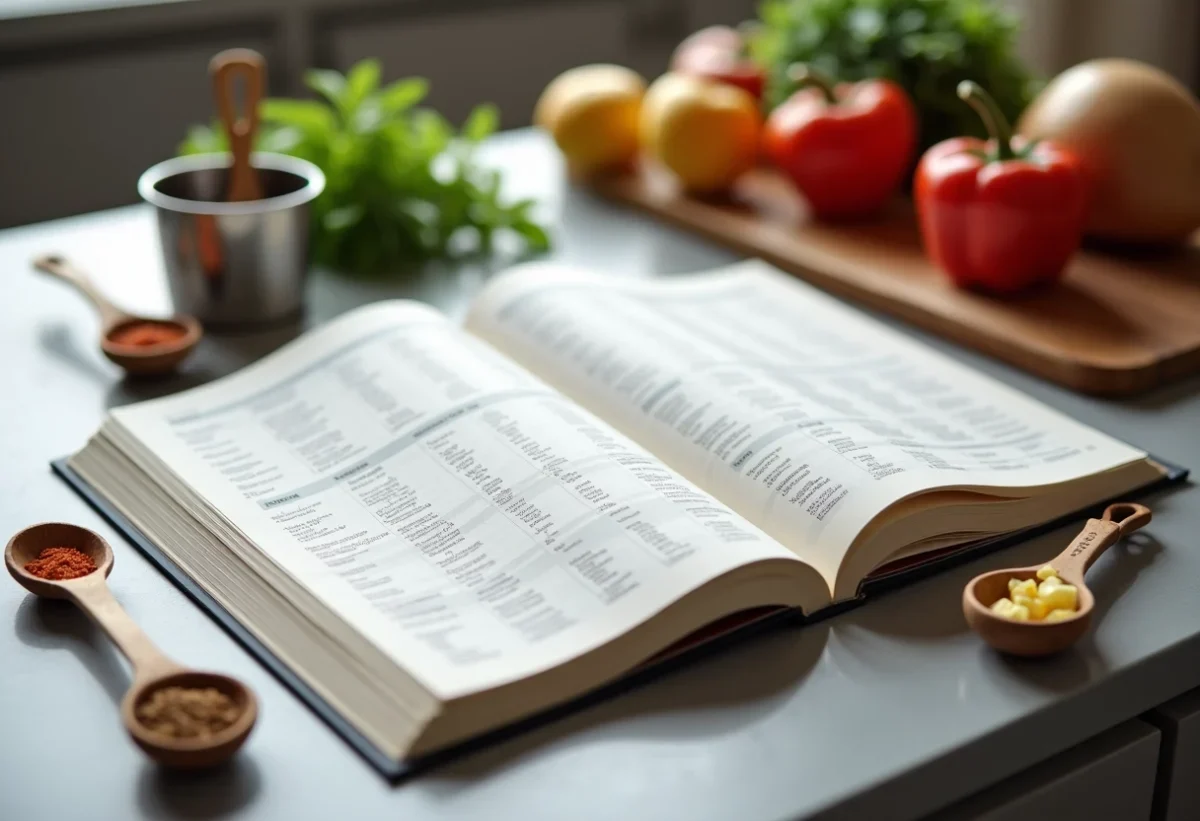
Transforming foreign recipes or quantities in cooking can often be problematic, especially when measurement units vary from one country to another. Switching from ounces to grams, cups to milliliters, or Fahrenheit to Celsius can quickly become a puzzle.
For cooking enthusiasts, mastering these conversions is essential for successfully creating dishes from abroad or adapting recipes to personal habits. Fortunately, there are simple and effective tips to help navigate these conversions easily, without needing to pull out a calculator or spend hours searching online.
Mastering Measurement Conversions for Foolproof Recipes
Conversions in cooking are crucial for accurately executing recipes. For example, converting cups to milliliters or ounces to grams allows for faithful reproduction of a recipe. For a Margherita pizza, correctly converting the ingredients ensures an authentic taste.
Common Equivalents
- 1 cup = 240 ml
- 1 ounce = 28.35 g
- 1 tablespoon = 15 ml
- 1 teaspoon = 5 ml
Take into account the density of ingredients. For example, flour and sugar have different densities, which affects their conversion to grams. Using precise conversion techniques is fundamental for consistent results in cooking.
To convert 120 cl to liters, divide by 10: 120 cl = 1.2 liters. This conversion simplifies the use of metric units in recipes.
A kitchen scale and measuring cup are essential tools to ensure accurate measurements. Conversion charts and measuring spoons also make these conversions easier.
For chefs, weight measurements are preferred for reliable results. Flour, sugar, water, milk, and oil are common ingredients requiring precise conversions to ensure a successful cooking experience. 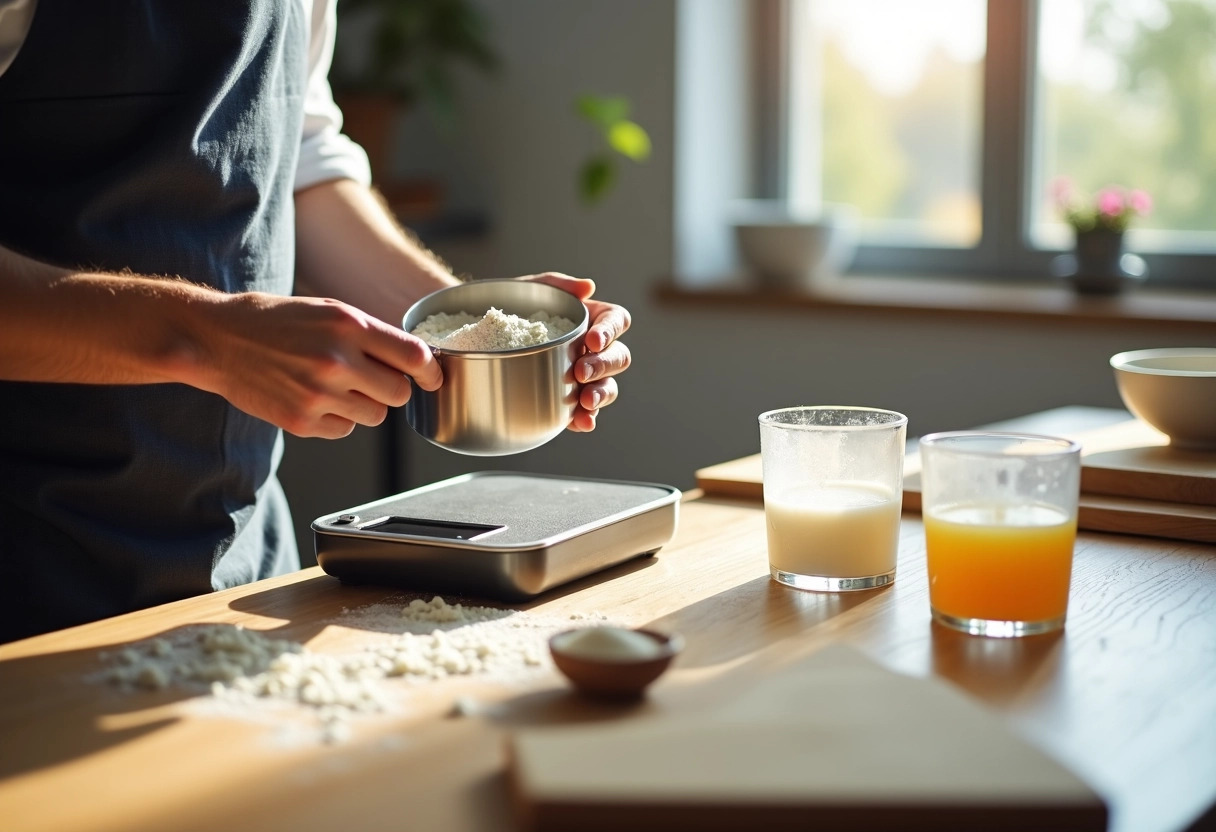
Tools and Techniques for Culinary Precision
Chefs prefer to use weight measurements to guarantee optimal accuracy. Several tools facilitate this necessary rigor in the kitchen. A kitchen scale is essential for weighing ingredients accurately. A measuring cup allows for measuring liquids such as water, milk, and oil.
For increased precision in small quantities, measuring spoons are indispensable. They allow for precise dosing of spices and leavening agents. The conversion charts displayed in the kitchen provide a quick and reliable reference for switching from one unit of measurement to another without errors.
- 1 gram of flour = 0.035 ounces
- 1 milliliter of water = 0.034 fluid ounces
The density of ingredients impacts their conversion. For example, 100 grams of flour does not equal 100 grams of sugar in volume. Consider these differences when converting to avoid discrepancies in recipes.
Experience and intuition also play a role in mastering conversions. An experienced chef knows how to adjust proportions to achieve the desired taste and texture. Practice regularly to develop this intuition and improve your culinary precision. The right tools, combined with consistent practice, turn every recipe into a foolproof success.