
Support for disadvantaged children suffers from a structural blind spot: most initiatives measure the resources deployed (number of meals distributed, school kits provided) rather than the actual trajectories changed. A feedback on social action reminds us that the evaluation of digital inclusion, for example, must measure the processes that have actually succeeded and the rights opened, not just the number of distributed equipment. This gap between funded effort and tangible result runs through the entire child protection sector in France.
Assessing the real impact of a donation on a child’s trajectory
A one-time donation finances a one-time action. For it to contribute to a lasting change in a child’s path, it is necessary to verify that the supported initiative addresses the structural determinants: effective access to rights, residential stability, and academic success.
We recommend distinguishing three levels of indicators before supporting a program. The first concerns outputs (how many children are affected). The second focuses on outcomes (how many children have actually accessed a right, maintained their schooling, stabilized their housing). The third, rarely documented, measures the net impact, meaning what would not have occurred without the intervention.
Organizations that publish their data on these three levels are still in the minority. When you identify an association that is transparent about its measurable results, as can be found via enfantsdelespoir.fr, it is a sign of maturity in managing aid.
Child protection is precisely evolving towards a management approach that is more data-driven, focused on control and evaluation. This trend pushes associative actors to account for the real effects of their programs, not just the budgets consumed.
Residential stability and children’s health: the knot that one-time aid does not untie
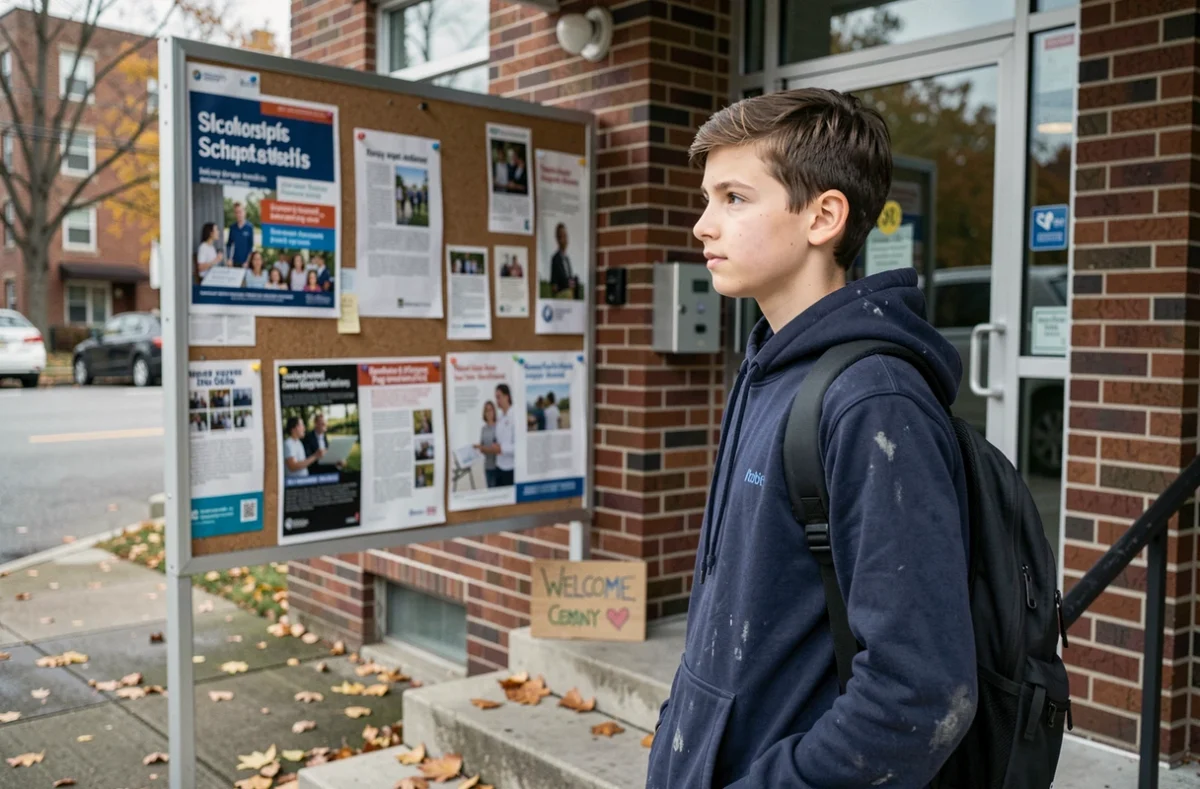
Residential instability generates cumulative obstacles in accessing care, deteriorates mental health, and compromises child development. This observation, documented for pregnant women and homeless newborns, applies to all children in precarious situations.
Acting during the first 1,000 days is a recognized lever, but still insufficiently adapted to very poor families. Classic perinatal support programs assume stable housing, regular access to a doctor, and administrative continuity. All of these prerequisites are absent for families in emergency housing or homelessness.
Temporary housing for homeless families is becoming a concrete axis of support for schooling. Several actors, both public and private, are exploring initiatives that link housing and educational support to stabilize the living conditions of the affected children.
What this changes for the donor
Supporting a program that provides school supplies to a child whose family changes housing every three months amounts to treating a symptom. An effective initiative first stabilizes the living environment before addressing education or health. Associations that integrate housing, medical follow-up, and educational support into a single pathway achieve more sustainable results.
Child protection: what the recent legislative framework changes
The bill on child protection, adopted by the National Assembly in its first reading on July 21, 2026, introduces a logic of stability in placement pathways. Among the measures: early reassessment of placements, strengthened recourse to trustworthy third parties, and a child safety order in cases of serious and immediate danger.
For associative actors, this text changes the game. Structures that support placed children must integrate this requirement for continuity into their programs. A sponsorship or educational support that interrupts with each change of foster family loses most of its effect.
We observe that the most advanced associations in this area are already aligning their interventions with the child’s journey rather than the institution’s calendar. Specifically, this means:
- A single point of contact who follows the child regardless of changes in the hosting structure, to maintain a stable link over several years
- A regular evaluation of the rights actually opened (health coverage, school enrollment, access to extracurricular activities) rather than just an administrative check
- A coordinated effort with child welfare services to anticipate disruptions in pathways, particularly during transitions between systems
Academic success of disadvantaged children: beyond homework support
Traditional academic support is not enough to compensate for structural inequalities when the child faces food insecurity, housing instability, and difficulties accessing care.
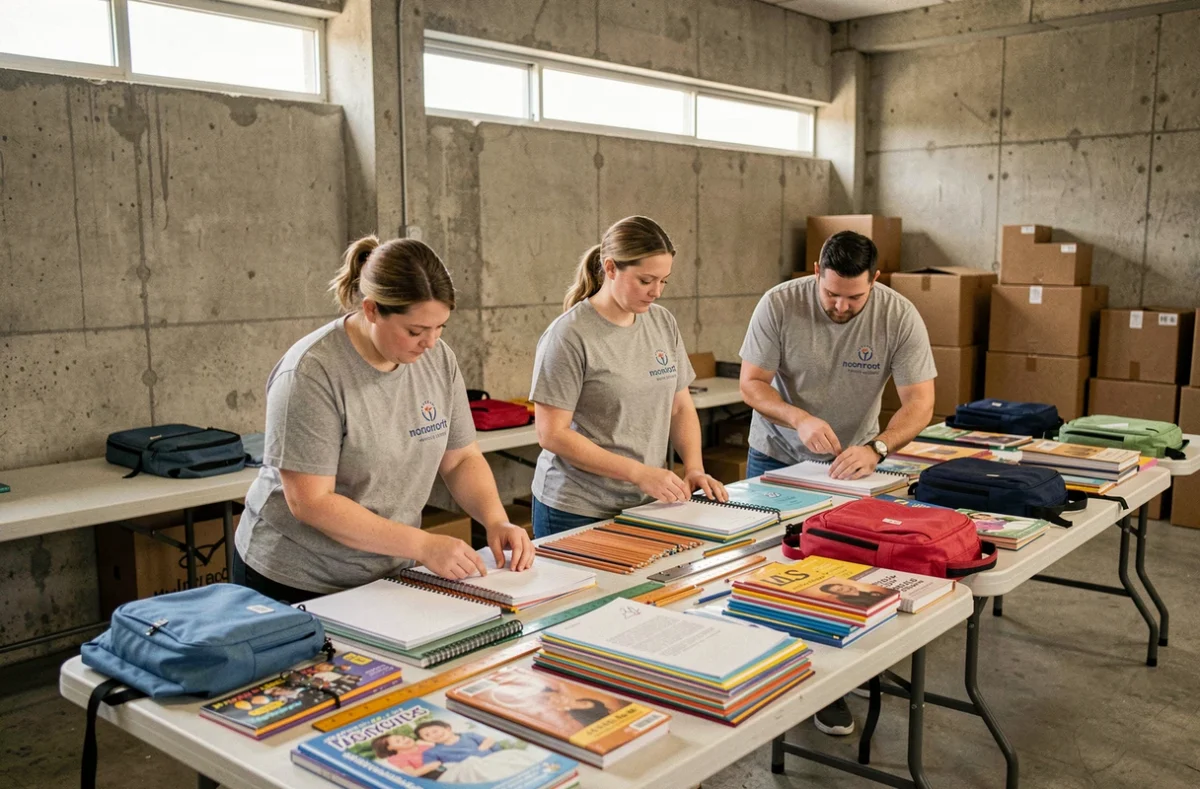
Successful programs articulate several levers simultaneously. Homework support combined with nutritional follow-up and regular access to a doctor produces measurable effects on school retention. Conversely, funding only tutoring hours for a child who sleeps poorly because they live in a noisy emergency shelter ignores half of the problem.
How to direct your commitment
Before financially supporting an educational program for children in precarious situations, it is useful to check a few concrete points:
- Does the program measure the school retention rate over several years, or just the number of hours of support provided?
- Does it include a health component (medical assessment, psychological follow-up, access to the cafeteria)?
- Does it foresee coordination with housing actors for families in precarious housing situations?
- Are the results published and comparable from year to year?
These criteria allow for distinguishing actions that truly change a child’s trajectory from those that, despite good intentions, remain surface interventions.
The child protection sector in France is professionalizing. Donors and volunteers who demand proof of impact do not weaken associations; they push them towards more rigorous practices. Every euro directed towards a program evaluated on its real results carries more weight than a donation earmarked for a visible but unmeasured action.