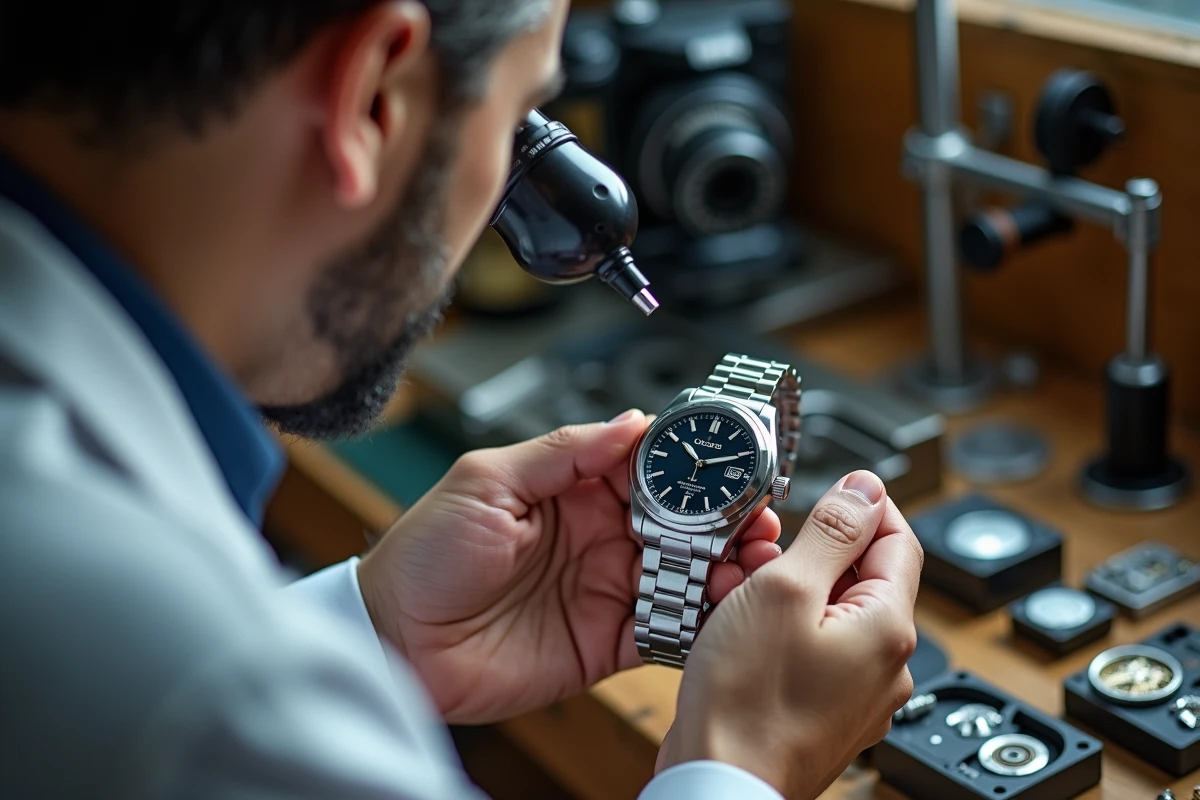
You just bought an Orient watch online or during a trip, and doubts start to creep in. Is the logo properly centered? Does the movement seem odd? Recognizing a genuine Orient watch requires a few simple reflexes, provided you know where to look. The good news: Orient counterfeits are rarely sophisticated copies, making verification accessible even without watchmaking expertise.
Orient Reference Code: The First Anti-Counterfeit Reflex
Before examining the dial or the strap, the most reliable verification concerns the model code engraved on the case back. Every Orient watch has a specific reference (such as RA-AA0001B19B) that corresponds to a model listed on the official site orientwatch.fr.
Current counterfeits are not carefully crafted replicas. They are most often generic Chinese watches on which an Orient logo has been applied. The reference code, when it exists, does not correspond to any real collection. Type the reference into the search bar on the official site: if nothing comes up, the watch is suspicious.
Also compare the displayed specifications (diameter, type of glass, caliber) with the official product sheet. A discrepancy in just one parameter is enough to confirm a counterfeit. To discover Flash Wave, you will find a detailed method that complements this verification by reference.
F6 Calibers and Orient Movement Markings
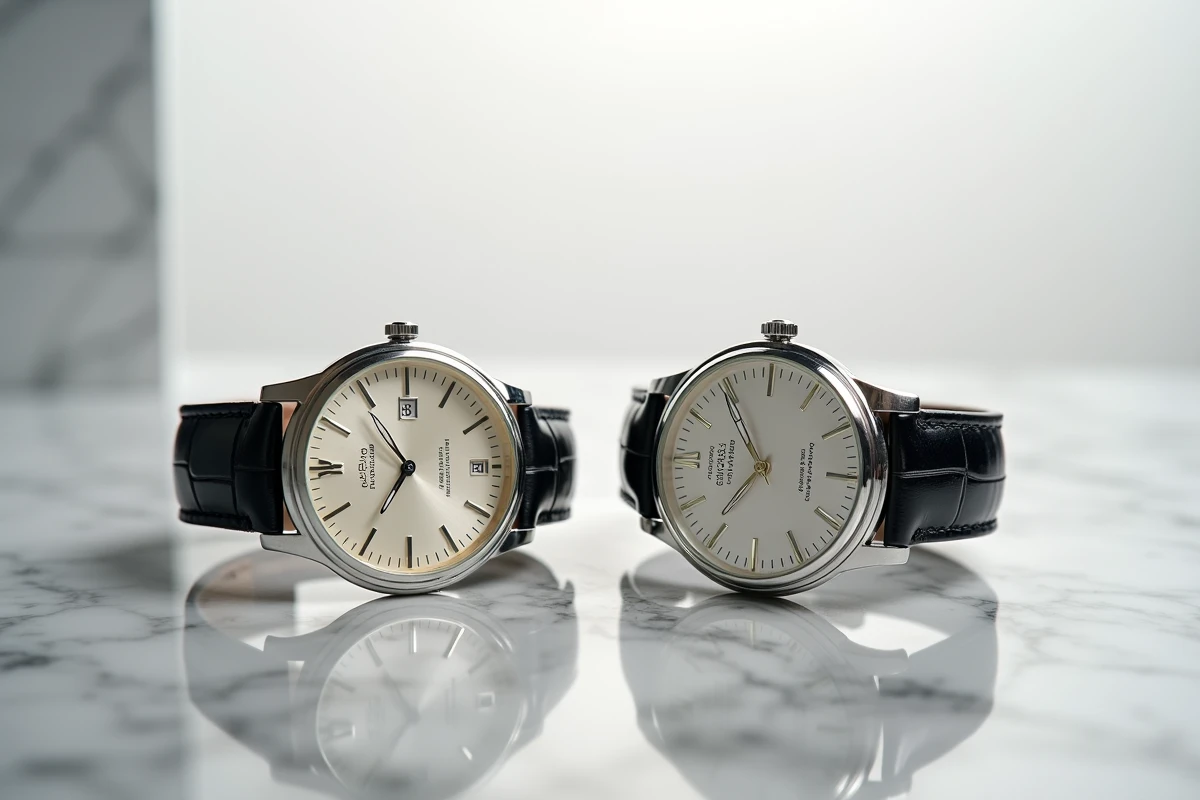
You may have noticed that some automatic watches have a transparent back? On a genuine Orient, this is a goldmine of information. Recent F6 generation calibers (F6724, F6922, among others) bear specific markings directly on the movement: the full name of the caliber and the Orient logo engraved on the plate.
These markings on the movement are rarely reproduced by counterfeiters. On a fake Orient, the movement is usually a generic mechanism without inscriptions, or with blurry and poorly positioned engravings.
The F6 calibers also include functions that cheap movements do not offer:
- The hacking feature, which stops the balance wheel when you pull the crown to set the time accurately
- The manual winding, which allows you to restart the watch without shaking it after a long stop
- A power reserve that meets official specifications, generally exceeding 40 hours on recent models
If the watch you are examining does not offer either hacking or manual winding while the official model does, that is a clear signal.
Dial, Logo, and Finishes: What Fakes Systematically Miss
The dial is the most visible part, and paradoxically the one that counterfeiters mess up the most. On a genuine Orient, the shield-shaped logo is applied (in relief) or printed with perfect clarity. The letters “ORIENT” below the logo have regular spacing and consistent typography from one model to another.
A blurry, misaligned, or poorly painted Orient logo betrays a counterfeit. Also look at the indices (the hour markers): on an authentic model, they are perfectly aligned with the graduations of the bezel or rehaut.

Another revealing detail: the inscriptions on the back of the case. A genuine Orient displays clear, laser-etched engravings, without smudges or irregularities. Counterfeits often have characters of uneven size or mistakes in the technical mentions.
The quality of the glass also deserves your attention. Recent Orient models use sapphire glass or treated mineral crystal. A glass that scratches easily with a nail indicates low-quality material incompatible with Orient production.
Orient Warranty and Official Sales Channels
Since late 2023, Orient has strengthened its direct sales policy through regional sites, including orientwatch.fr for the French market. The standard manufacturer’s warranty is only valid for watches purchased through official channels or authorized dealers.
In practical terms, this means that an Orient watch bought on a general marketplace at an abnormally low price will likely not have a valid warranty. The absence of an official Orient warranty card is a reliable indicator of a counterfeit.
Have you spotted an Orient on a third-party site? Check these points before buying:
- Is the seller listed among the authorized dealers accessible on the official Orient site?
- Is the price consistent with that displayed on orientwatch.fr for the same model?
- Does the seller provide a complete reference number that you can verify online?
A price significantly lower than the official rate, without justification (end of series, documented second-hand), is the most common warning signal.
Community Feedback on Orient: Recent Traps
Recent discussions on r/OrientWatches confirm a clear trend. The fake Orients in circulation do not seek to perfectly imitate an existing model. They rely on the buyer’s ignorance by combining a generic case with a dial bearing the Orient logo.
The exact match between reference, photos, and official specifications remains the safest method. Several community members recommend photographing the movement visible through the transparent back and comparing it with images available on specialized forums or the official site.
The most copied collections are those that benefit from the highest online visibility: Bambino, Mako, Kamasu. If you buy one of these popular models outside an official channel, be extra vigilant about every technical detail mentioned in this article.
Verifying an Orient watch ultimately comes down to three steps: checking the reference on the official site, examining the movement markings through the transparent back, and demanding a valid manufacturer’s warranty. These three steps are enough to filter out the vast majority of current counterfeits.