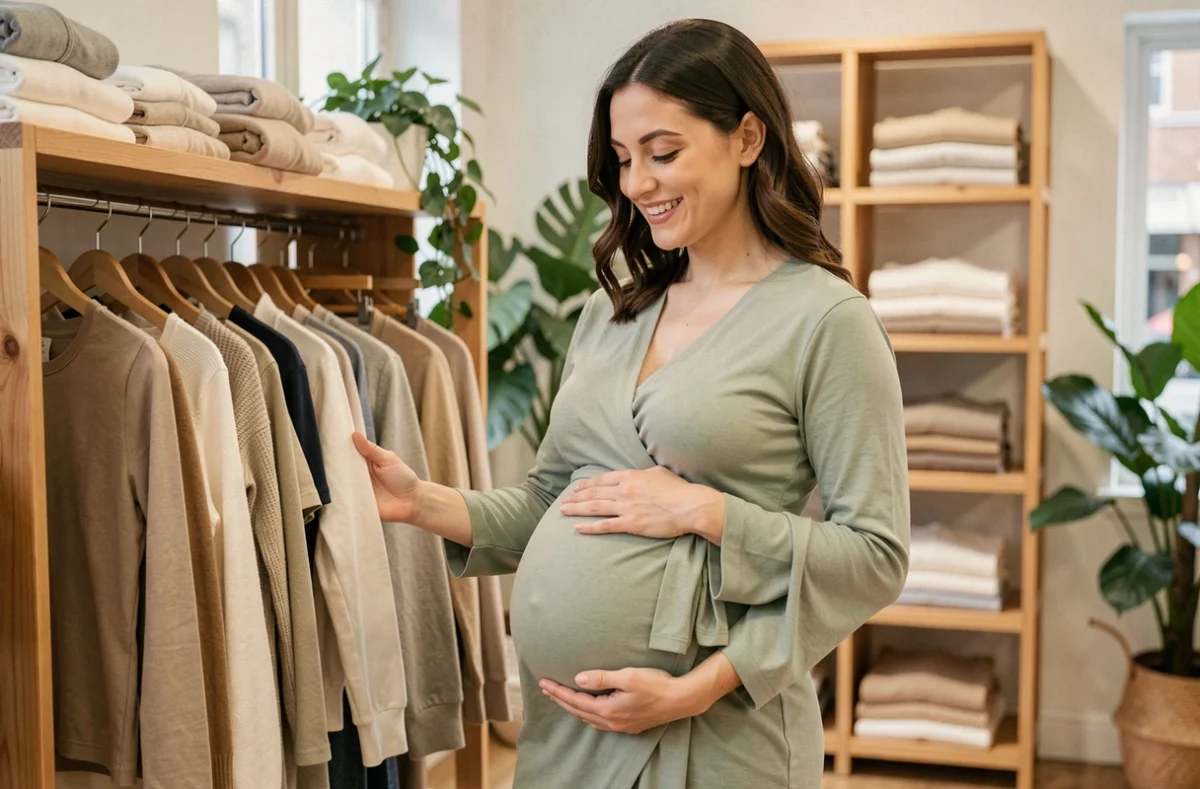
Your favorite jeans no longer fit after the button at the four-month mark, the bra is tight from the moment you wake up, and the office sheath dress becomes a torture after lunch. It’s often this kind of very concrete signal that prompts a wardrobe review. Choosing the right maternity clothes means anticipating these moments to maintain comfort without sacrificing a style that reflects who we are.
Materials and fabrics suitable for pregnancy: what the skin can really tolerate
There is a lot of talk about cuts and sizes, but rarely about what happens when fabrics come into direct contact with the skin. Body temperature rises during pregnancy, sweating increases, and some women develop skin sensitivities they have never experienced before. The choice of fabric then becomes the primary criterion, even before the cut.
Cotton remains a safe bet: breathable, soft, and easy to wash at high temperatures. Linen offers excellent thermal regulation for warm months. Natural fibers limit irritation and overheating, two common issues starting from the second trimester.
To find maternity clothes for pregnant women that meet these requirements, it’s more efficient to check the composition label directly rather than the marketing term “maternity comfort.”
Synthetic materials (polyester, nylon) should not be completely ruled out. When blended with elastane, they provide the necessary stretch for pants and leggings. The key is the percentage: a fabric that contains at least half natural fibers will maintain a pleasant feel while stretching. A 95% polyester legging worn for eight hours in summer is like a walking sauna.
Maternity wardrobe designed for postpartum and breastfeeding
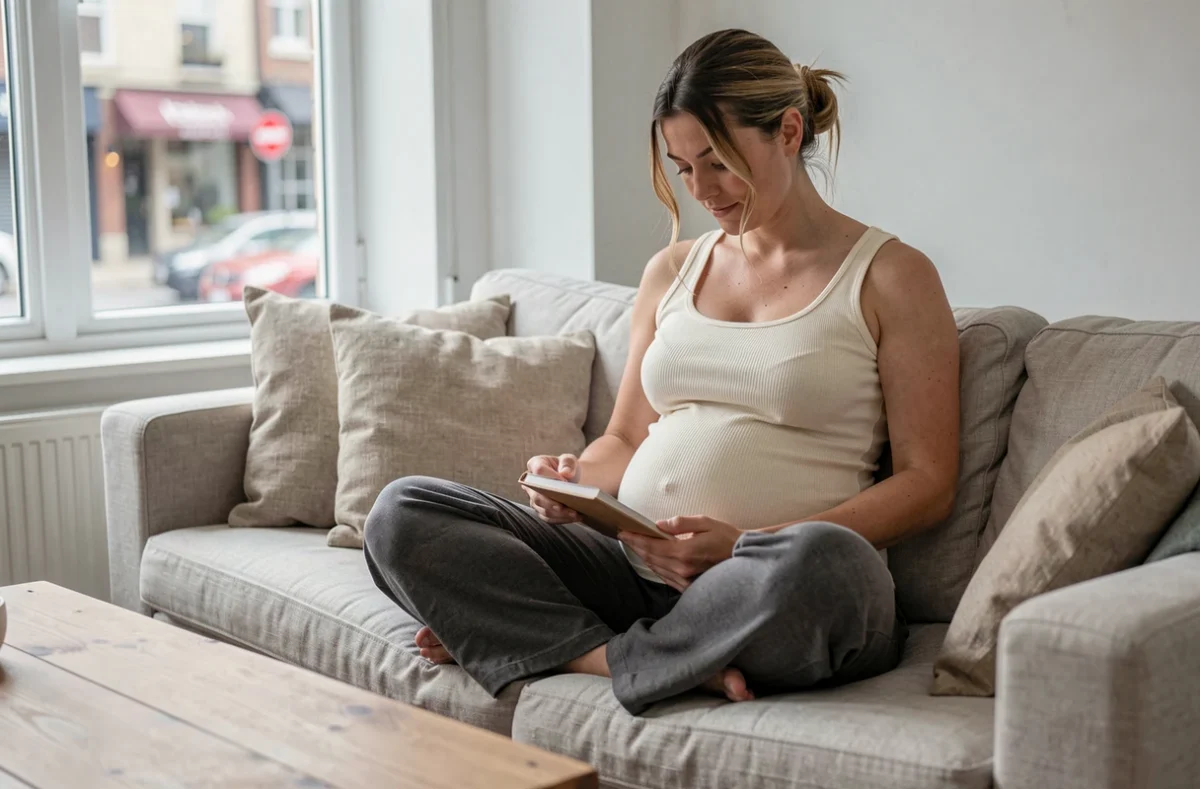
One angle that most guides overlook: maternity clothes are not just for nine months. After childbirth, the body takes several weeks to regain its bearings. The belly remains swollen, the breasts change in volume, and if breastfeeding, accessing the breast becomes a daily challenge.
Thinking about the maternity wardrobe by incorporating postpartum needs avoids having to buy a second wave of clothes. Specifically, this means prioritizing certain pieces over others:
- Front-opening tops (buttons, wrap styles, side zippers) that allow for breastfeeding or pumping without undressing at the office or while out.
- Pants with an adjustable waistband under the belly, which can also be worn when the abdomen hasn’t yet deflated after childbirth.
- Wrap dresses, whose cut adapts to body shape changes without an expiration date.
Buying pieces that work from the second trimester to postpartum reduces the overall budget and limits the accumulation of clothes worn for three months and then abandoned.
Maternity clothing size: keep your usual size or go up a size
The majority of specialized brands base their sizing on pre-pregnancy sizes. If you wore a size 40 before, you order a size 40 in maternity clothes. The cuts already incorporate ease around the belly, bust, and hips.
The classic trap: taking a size up “just in case.” As a result, the shoulders droop, the armholes gape, and the garment loses its shape after the first wash. A well-cut maternity garment should fit the shoulders and bust, then allow space where the body expands.
For non-maternity-specific pieces that we adapt (oversized dress, boyfriend shirt), the rule is different. You can go up a size, provided the material is structured enough not to look like a bag. Fluid viscose in size L on a body size S rarely yields a flattering result, even with a belt above the belly.
Second-hand and rental: a practical option for clothes worn for a few months
On average, maternity clothes are worn for four to six months. That’s short. Buying a complete new wardrobe (jeans, dresses, tops, lingerie) represents a significant budget for a limited usage period.
The French second-hand clothing market is growing, according to a study published by Refashion in October 2025. Channels are multiplying: peer-to-peer platforms, charity thrift shops, maternity-focused exchange groups. Second-hand allows you to try cuts without a heavy financial commitment and then resell the pieces in good condition.
Rental options also exist, offered by some specialized brands. The principle: you receive a set of clothes suitable for the current trimester, and you return them when the size no longer fits. This system is particularly suitable for “event” pieces (ceremony dress, work suit) that will only be worn once or twice.
Everyday comfort: the technical details that make all the difference
Beyond style and size, a few technical details separate a comfortable maternity garment from one that you want to take off as soon as you get home.
- Flat seams prevent marks and chafing on more sensitive skin, especially around the belly and under the bust.
- The integrated support band in pants should rise high enough to provide support without compressing. A band that is too narrow rolls up and creates constant discomfort.
- Adjustable straps on dresses and bras accommodate volume changes without straining the shoulders.
- Side or back closures make dressing easier when bending over becomes challenging in the third trimester.
The comfort of maternity clothes often hinges on these finishes that you can’t see in photos but feel from the first hour of wear. Taking the time to check these points, whether in the fitting room or by reading reviews from other pregnant women, helps avoid disappointing purchases and closets overflowing with unworn pieces.