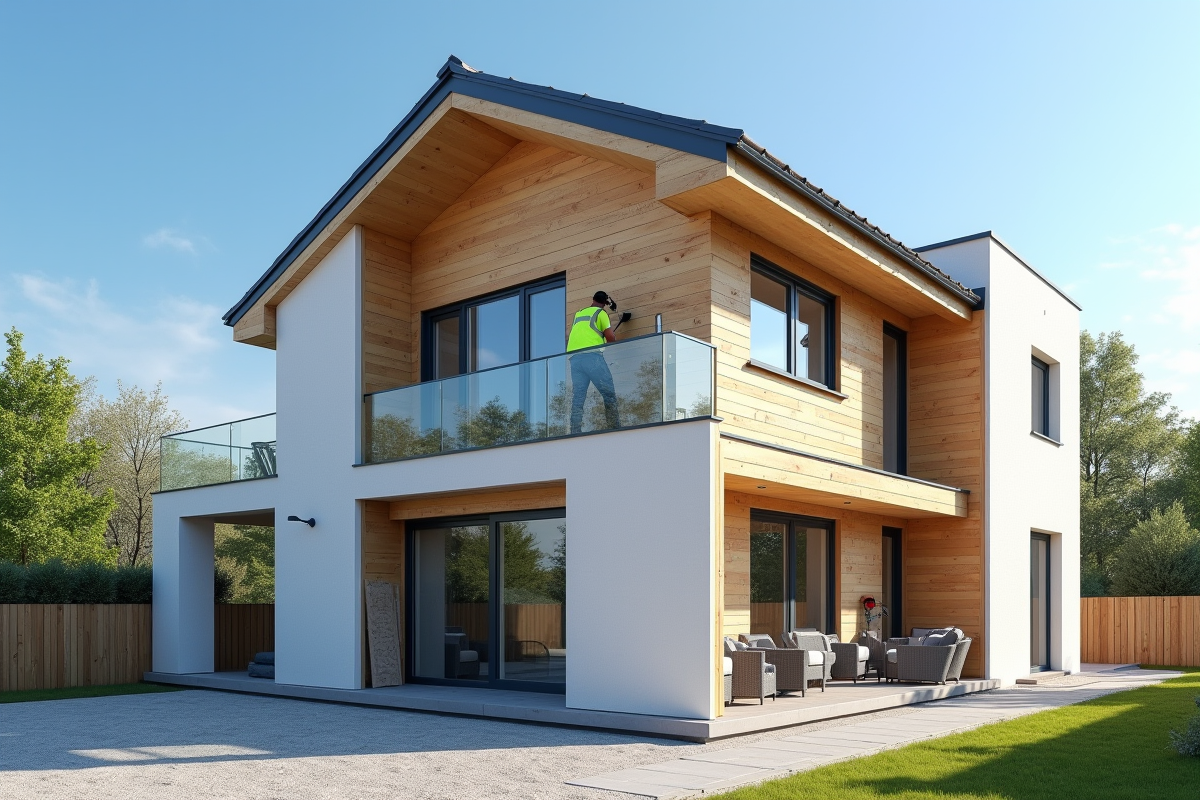
The thermal insulation of buildings is a major challenge in the face of current energy issues. Reducing heat loss, improving indoor comfort, and decreasing energy consumption are essential goals for property owners. External insulation stands out as an effective and aesthetic solution. This technique, which involves wrapping the building in an insulating coat, not only improves energy performance but also gives new life to the habitat through various finishes. What are the reasons for choosing this method? What are its advantages and how is it implemented?
The advantages of external insulation
External insulation offers a multitude of advantages, both in terms of energy efficiency and aesthetics. By dressing the exterior facades, it allows for direct action on thermal losses without reducing interior space.
- Significant improvement in energy performance: This method considerably reduces thermal bridges, the areas where heat escapes, particularly at the junctions between walls and floors.
- Increased indoor comfort: By stabilizing indoor temperatures, external insulation ensures optimal thermal comfort year-round, protecting against both winter cold and summer heat.
- Aesthetic enhancement: It offers a wide range of finishes that can rejuvenate the facade while preserving the architectural character of the building.
The different types of insulating materials used
The choice of materials is essential to guarantee effective insulation. Each type of material has specific characteristics that influence the external insulation process.
Rock wool: This material is widely used for its insulating properties and excellent fire resistance. It also provides good acoustic insulation.
Expanded polystyrene (EPS): Lightweight and easy to handle, EPS is valued for its advantageous quality-price ratio. It offers good thermal resistance and is often used in external thermal insulation systems under render.
Wood fiber: A natural material, wood fiber provides effective thermal insulation while respecting the environment. Its ability to regulate humidity makes it an ideal choice for passive houses.
Implementation process
For external insulation to be effective and durable, its implementation must follow certain key steps. This process requires technical expertise and careful preparation.
- Preliminary assessment: A thorough analysis of the condition of the facades allows for the identification of any issues to be addressed before the installation of insulation.
- Preparation of the substrate: The surface must be cleaned and free of any irregularities, ensuring optimal attachment of the insulating panels.
- Installation of insulating panels: The chosen materials are fixed to the facade using specific adhesives or anchors. This step is crucial to avoid thermal bridges.
- Finishing touches: Renders, cladding, or coatings are applied to protect the insulation and provide an aesthetic finish in harmony with the existing architecture.
Costs and financial assistance
The cost of external insulation depends on many factors: type of materials, complexity of the project, surface area to be covered.
However, despite this initial investment, numerous financial aids are available to lighten the project budget.
Property owners can benefit from schemes such as the Tax Credit for Energy Transition (CITE), assistance from the National Housing Agency (ANAH), or zero-interest eco-loans.
These supports make this insulation method accessible to a larger number of people.