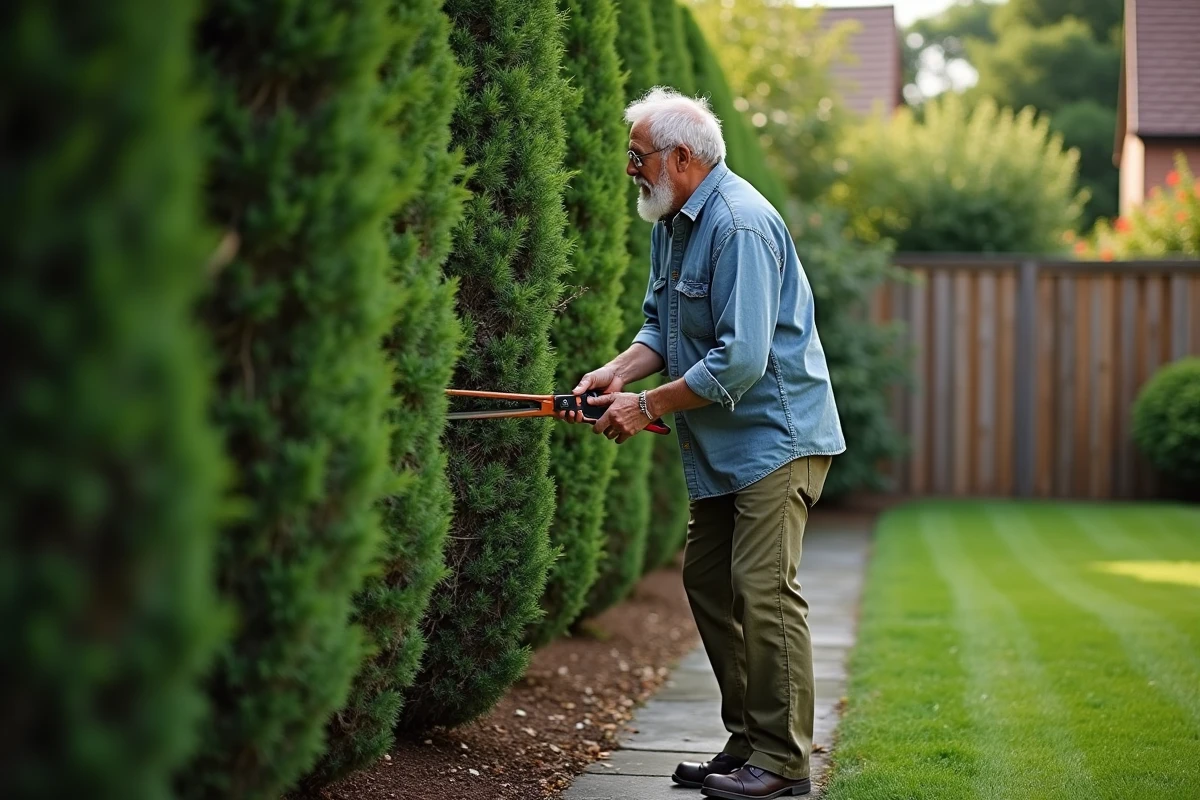
A hedge that has become too wide encroaches on the garden, obstructs passage, and eventually becomes bare from the inside. The temptation to cut everything back at once is strong, but this is precisely the action that condemns most thick hedges. The real challenge is not cutting, but knowing how far to cut without reaching the dead wood, and at what pace to proceed so that the vegetation can regenerate.
In recent years, recommendations from horticultural organizations have evolved. Episodes of drought and heatwaves require a rethink of how to prune wide hedges: retaining more foliage limits evapotranspiration, and a too-severe cut during periods of water stress can be enough to exhaust an already weakened shrub.
Inner dead zone: the factor that changes the entire pruning strategy
On a hedge that has been neglected for several years, the inside often consists of bare wood, without foliage or viable buds. This dead zone is the main trap. If the cut reaches this vegetation-free wood, certain species (thuja, Leyland cypress) simply will not regrow.
The first step is to manually pull apart the outer branches to identify where the green foliage ends and where the dry wood begins. This limit varies according to species and exposure: a shaded side becomes bare more quickly than a sunny side. Sometimes the cutting margin does not exceed a few centimeters in certain sections.
It is this visual inspection that determines the feasibility of the project. If the green area is very thin, significantly reducing the width in a single intervention is unrealistic. It is better to consider trimming an overly wide and thick hedge in several stages, spread over two or three seasons, to allow light to gradually penetrate and stimulate new growth.
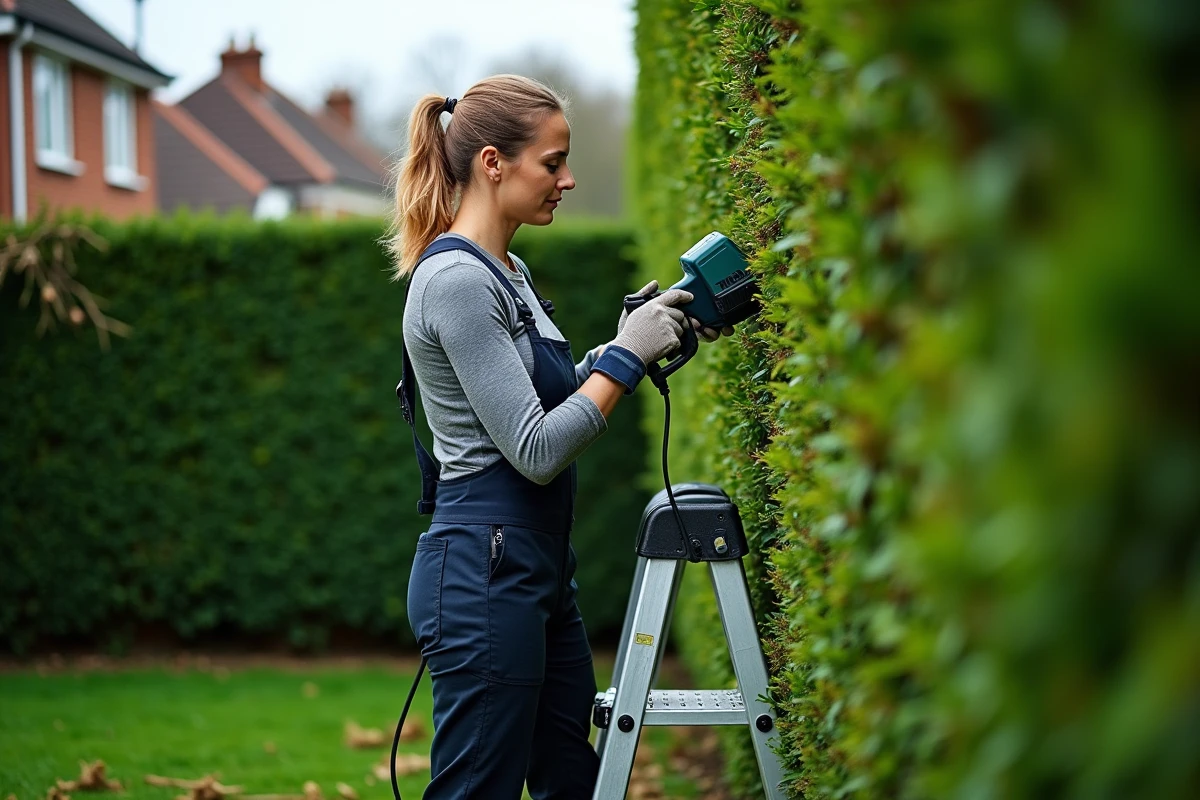
Gradual width reduction: method by alternating faces
The safest technique for reducing a thick hedge without compromising it is based on a simple principle: only trim one side per season. In the first year, one side is reduced to the limit of the green foliage, without going beyond. The opposite side remains intact.
This untrimmed side continues to nourish the plant through photosynthesis while the trimmed side regenerates its branches. In the following season, the second side is addressed. This approach requires patience, but it preserves the shrub’s ability to produce new shoots.
Species that tolerate a more drastic cut
Not all hedges react the same way. Deciduous species (hornbeam, beech, field maple) and some evergreens like laurel or privet regrow well from old wood. A more drastic cut can be afforded on these plants, cutting back more without fearing permanent bare spots.
On the other hand, conifers like thuja or cypress almost never regenerate from old wood. On a conifer, any cut into dead wood is irreversible. This is why the alternating face method makes perfect sense for these species.
Adjusting the pruning period to climate stress and wildlife
The timing of the intervention is as important as the technique. Recent recommendations from INRAE and certain agricultural chambers emphasize one point: avoid severe pruning during periods of drought or extreme heat. The shrub, already in water deficit, does not have the resources needed to heal and produce new branches.
The most favorable windows for reduction pruning are at the end of winter (February-March, before the growth starts) and early autumn (September-October), when temperatures drop and the soil regains some moisture. Spring and summer should be reserved for light maintenance pruning.
Check for nests before any intervention
The French Office for Biodiversity and the LPO remind us that a wide and dense hedge serves as a refuge of high ecological value. Before starting, an inspection is necessary:
- Pull apart the outer branches to spot any active bird nests, especially between March and August
- Check for hedgehog shelters at the base of the hedge, especially if it touches the ground
- Maintain at least one untrimmed section along the total length, as a refuge zone for beneficial wildlife and pollinators
If an active nest is discovered, pruning must be postponed until the chicks have left the nest. This is not just a recommendation: the destruction of nests of protected species is punishable under French law.
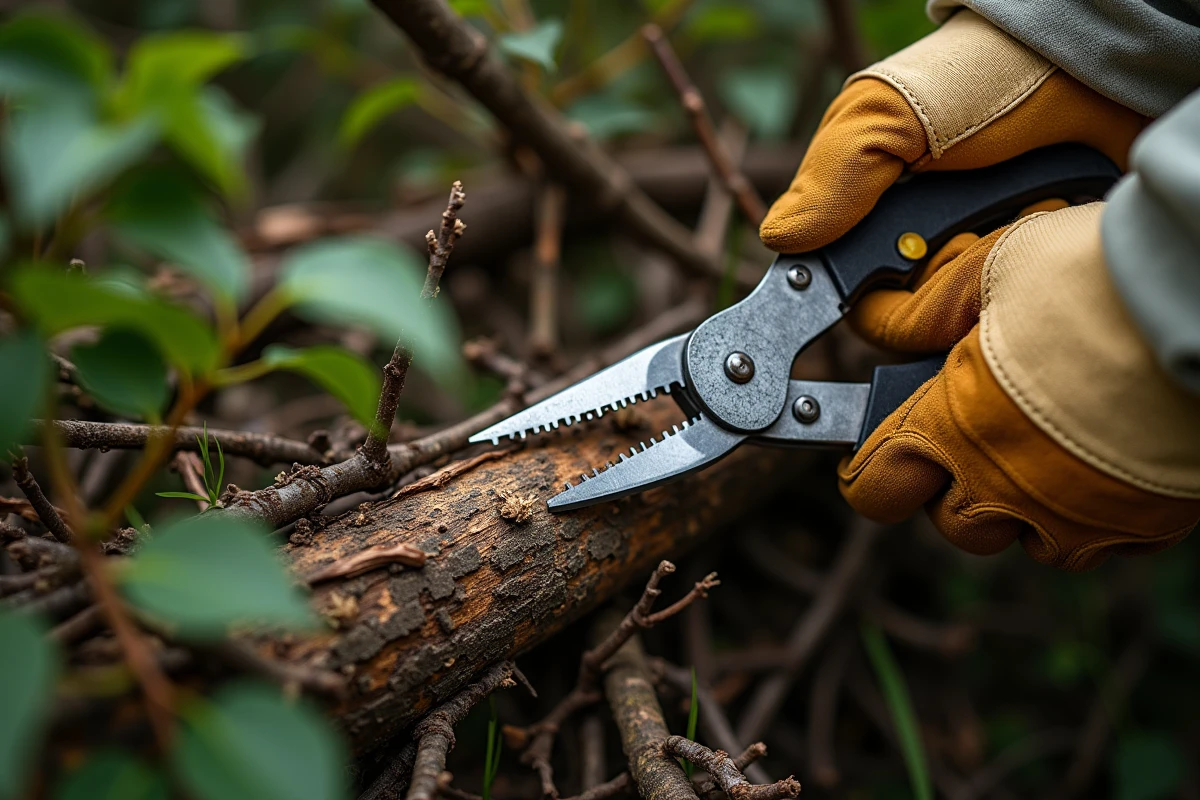
Tools suitable for a thick hedge: what cuts and what pulls
A standard electric hedge trimmer struggles with branches over two centimeters in diameter. On a very thick hedge, the intertwined branches and semi-dead wood make the device ineffective, even dangerous (jamming, recoil).
For restructuring a wide hedge, three tools complement each other:
- A lopper or a ratchet pruner for cutting branches up to four or five centimeters in diameter, cleanly and without crushing the wood
- A Japanese pruning saw for thicker or poorly positioned branches, where the pruner cannot reach
- The hedge trimmer (gas or pole) is used for finishing touches, once the larger sections are cleared, to even out the surface of the remaining foliage
Cutting with pruners before using the hedge trimmer prevents straining the device and produces clean cuts that heal better. On branches larger than a few centimeters in diameter, a crushed cut from an unsuitable tool promotes fungal diseases.
After cutting: support regrowth in the long term
A hedge severely reduced in width needs monitoring for the next two years. A compost application at the base in autumn stimulates root regrowth and compensates for the stress endured. A thick mulch on the ground limits competition from the lawn for water and nutrients.
The new shoots that appear on the trimmed sides should be pinched (slightly trimmed at the tip) during the first season to encourage branching. Without this action, the hedge produces long, poorly branched stems that do not fill the gaps.
For evergreen species, the reestablishment of dense foliage generally takes two to three seasons. For deciduous species, the result is often visible by the second year. The regularity of light pruning after restructuring prevents a return to the initial problem. Two passes per year on vigorous species are enough to contain the width without ever returning to an unmanageable hedge.