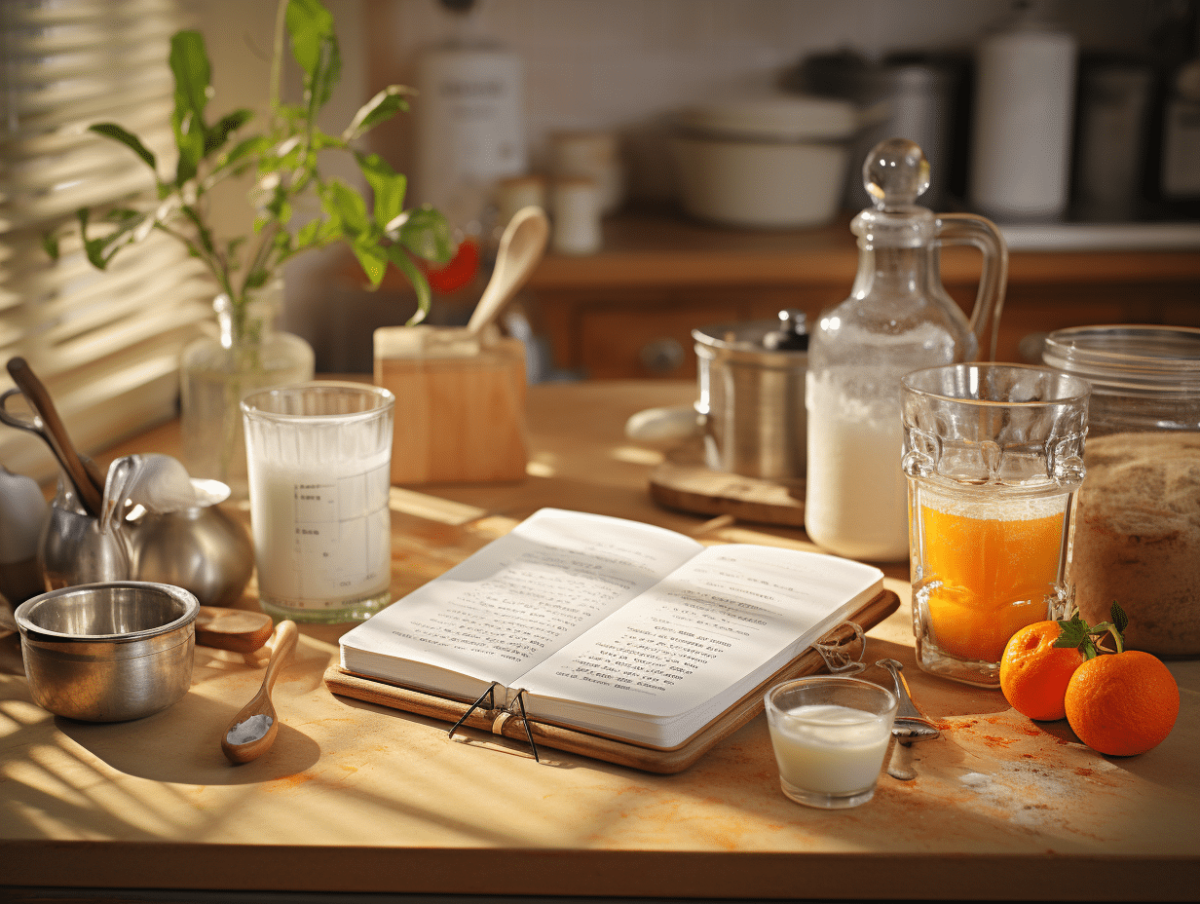
Culinary art, with its skillful blends of ingredients and flavors, often relies on a precision that is almost scientific. When embarking on the preparation of delicious dishes, the importance of measuring accurately and converting measurement units correctly can be the difference between a gastronomic success and a culinary disaster. Whether you are a novice or an experienced cook, mastering the equivalents between grams, ounces, cups, or milliliters is fundamental to successfully adapting your recipes, especially when faced with guidelines from various cultural backgrounds, where measurement systems can vary greatly.
Understanding Measurement Units and Their Importance in Cooking
In professional catering, precision is not just a requirement; it is the foundation upon which the consistency of culinary results rests. Measurement units in cooking and the conversions that arise from them thus become essential tools to ensure this accuracy. The ability to juggle between grams, milliliters, cups, or teaspoons is an essential skill that chefs and kitchen staff must master to adhere to recipes precisely and to adjust them according to required quantities or taste preferences.
Culinary success relies on a good understanding and correct application of measurement units, which include liquid ingredients measured in tablespoons, teaspoons, or cups, as well as dry ingredients, often measured in specific cups for each type of ingredient, like a cup of flour. Moreover, the conversion of ‘200ml to g’ can vary significantly depending on the substance: water and flour do not have the same density, so the grams will not be equivalent.
As for weight measurements, they require the use of a kitchen scale for measurement in grams or ounces. The conversion from grams to cups or spoons is a delicate operation that must take into account the density and texture of the ingredients to avoid distorting the proportions. A precise scale is therefore an indispensable tool for reliable measurements, especially when it comes to scaling quantities for large preparations.
Liquid ingredients, although sometimes deceptive, require special attention as their volume can vary depending on temperature and viscosity. Liquid measurement is generally done in milliliters or cups, but you must respect the equivalents and not confuse volume with weight. A recipe requiring millimeter precision, such as pastries, cannot tolerate any approximation in the conversion of measurements.
Techniques and Tools for Accurate and Successful Conversions
In the culinary world, the conversion chart proves to be an indispensable tool for chefs and kitchen staff. This instrument allows for smooth navigation between different measurement units, thus ensuring the accuracy of proportions and the integrity of flavors. A well-designed conversion chart provides an overview of the equivalents between grams, milliliters, cups, and spoons, making recipe adjustments instantaneous and reliable.
In terms of practical strategies for conversion, professional cooking employs a range of methods including conversion between measurement units and recipe adaptation. Experienced chefs also use their experience and intuition to refine quantities, thus adapting recipes to the desired texture and taste. Intuition should always be backed by knowledge and understanding of the fundamental principles of measurement and conversion.
For example, consider a recipe for 300 people: a Pizza Margherita. The proportions of ingredients, such as 6 kg of flour, 30 g of yeast, 3 liters of water, 45 g of salt, 2 kg of tomatoes, 2 kg of mozzarella, 100 g of basil, and 50 ml of olive oil, must be converted accurately to ensure the quality and consistency of the dish. The success of such a dish in large quantities relies on meticulous conversion of recipes and ingredient quantities.
Accurate and successful conversions in cooking are not improvised: they depend on the judicious use of conversion charts, a deep understanding of the different measurement units, and the skillful adjustment of recipes according to specific needs. The art of culinary conversion is therefore a delicate balance between science and practice, between rigor and creativity.